
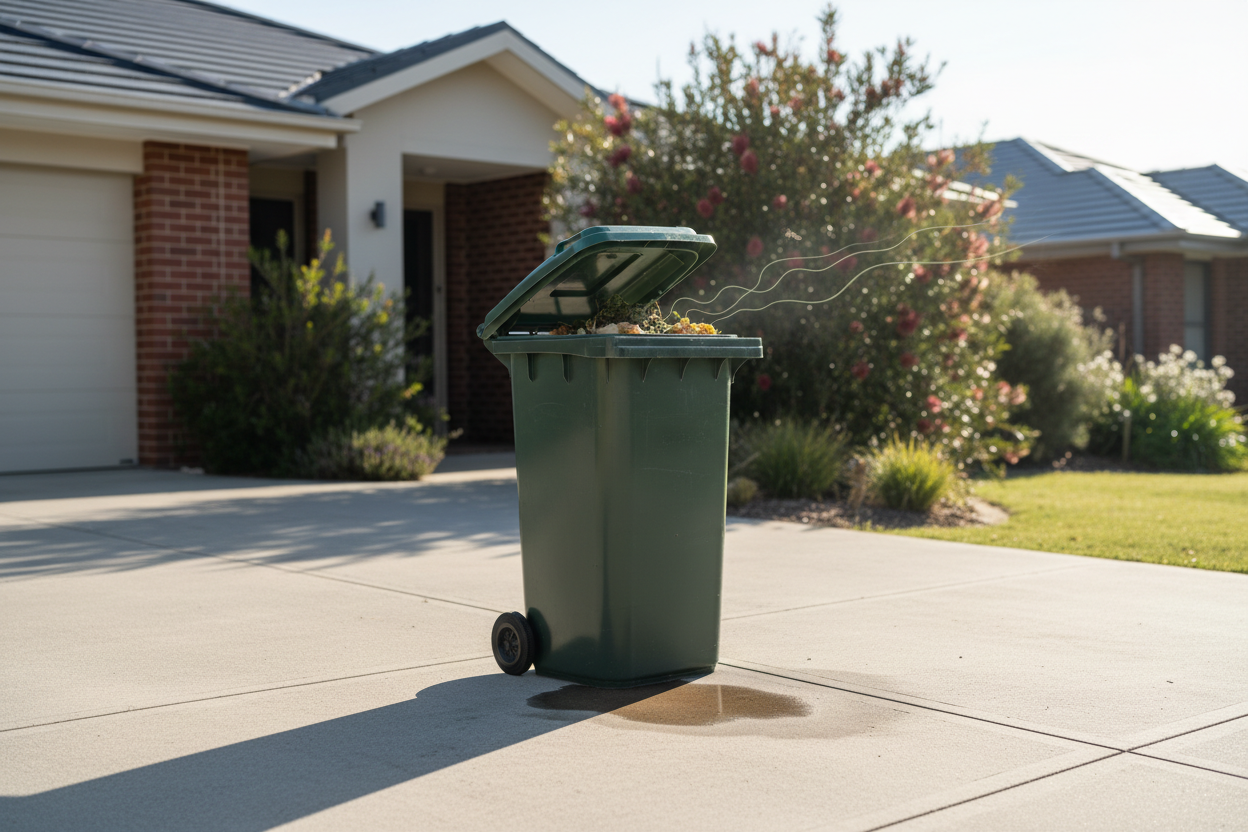

The rollout of FOGO (Food Organics and Garden Organics) bins across New South Wales and Victoria is a massive win for the environment. But for many Australian households, it has also introduced practical kitchen challenges: odours, leaks, bin juice, weak liners and pest concerns.
We reviewed more than 500 publicly available comments, consultation responses and community discussions relating to Australian FOGO programs, including feedback associated with Singleton Council, Liverpool City Council and the City of Whittlesea.
The data reveals a clear pattern: residents are frustrated, kitchens are messy, and many common complaints are linked to moisture, odours, leaks and pest activity.
How We Conducted This Analysis
From this broader review, we then coded a focused sample of 48 representative public comments to compare the most repeated FOGO pain points with 16 Compostar customer review and UGC entries.
Sources included:
• Public council consultation pages
• Council community feedback submissions
• Council FAQ and rollout discussions
• Public Reddit discussions relating to FOGO systems
• Local community discussions referencing council FOGO programs
Examples of councils reviewed included:
• Singleton Council (https://www.facebook.com/SingletonCouncil/posts/pfbid02LGG8HVXZ8VnwDARTdpcmEuWk1nXBg8o6nVEUrXRZuNvqfFMXbCXLFYHSKpbLmqJFl?rdid=CEXpliKzKTOEsFlU#)
• Liverpool City Council
(https://www.facebook.com/LiverpoolCityCouncilAustralia/posts/pfbid02QLbJg4mr7x5P6izxoHKV52SwxqdXZAT52RLiAwWyFw39wp1WsgokXACwFw2E88ijl?rdid=pYuO0c3gzHH9oTtR#)
(https://www.liverpool.nsw.gov.au/services/waste-and-recycling/food-organics-garden-organics)
• City of Whittlesea (https://www.whittlesea.vic.gov.au/Services/Rubbish-and-bins/My-bins/Food-and-garden-waste-bin-green-lid)
The objective was to identify recurring household pain points associated with food-waste collection, including odours, leaking liners, bin juice, fruit flies and maggots.
Here is what the data reveals about Australia's most common FOGO challenges—and what may help reduce them.
1. The "Slushy Mess" and Bottom Blowouts
One recurring and highly frustrating complaint across multiple local government areas involved the structural failure of compostable liners during household food-waste collection. When wet food scraps sit in a non-breathable environment, the bottom of the bag turns into a fragile, slushy mess.
What the residents say:
-
"The bag suddenly tore while I was taking out the rubbish, spilling it all over me. I almost cried!"
-
"A small leak soaked into our rug. We had to get it professionally cleaned."
-
"The spilled soup seeped onto the marble countertop and was very difficult to clean. The stains are still visible."
Pattern Identified
Across multiple council areas, complaints involving liner failure were most commonly associated with wet food scraps, accumulated moisture and prolonged indoor storage.
Underlying Cause
When excess moisture is trapped inside a sealed collection system, liquids accumulate as leachate ("bin juice"). This increases stress on weak liners and contributes to structural failure.
Even local councils, like the City of Whittlesea, admit that their supplied liners "are fragile... designed to break down easily" and often "split down the middle."
Potential Solution: This is why wet-strength and structural integrity matter when selecting a FOGO liner. Instead of relying on thin starch-based or film-style liners that may soften, split or lose strength when exposed to wet food scraps, some households are switching to AS 4736 Certified Compostable reinforced kraft paper liners.
👉 Read our full guide: Why Wet Strength Matters and How to Stop FOGO Bin Juice
2. Unbearable Odours and the Fortnightly Pickup
With many councils moving general waste to a fortnightly schedule and introducing weekly or fortnightly FOGO collections, odours are trapped for longer periods.
What the residents say:
-
"By the end of the day, the bin just stinks."
-
"No matter how often I clean the bin, the smell comes back within a day. It makes the whole kitchen feel dirty."
-
"Even with the bin lid closed, the odour somehow escapes."
Pattern Identified
Odour complaints appeared consistently across different council areas, particularly where food scraps remained indoors for multiple days before collection.
Underlying Cause
Trapped moisture reduces airflow and promotes anaerobic fermentation, leading to the release of strong odour compounds.
To combat this, councils often suggest tedious workarounds, such as sprinkling bicarbonate of soda, lining the bin with salt, or freezing meat scraps in containers until collection night.
Potential Solution: You shouldn't have to freeze your rubbish. One common cause of strong food-waste odour is moisture build-up and reduced airflow. Some non-breathable liner formats can trap liquid around food scraps, which may encourage anaerobic fermentation and stronger odour build-up.
👉 Discover the science: Why Your FOGO Bin Smells and How to Stop It
3. The Biological Nightmare: Maggots and Fruit Flies
When "bin juice" accumulates and odours develop, pest activity may increase, particularly during warmer Australian conditions. This is particularly disastrous during a hot Australian summer.
What the residents say:
-
"We once found maggots in the bin because food waste wasn't properly contained. Never want to experience that again."
-
"That stuff will encourage flies to lay eggs and you'll have maggots galore!"
Pattern Identified
Fruit flies and maggots were frequently mentioned alongside reports of excess moisture, bin juice and food-waste odours.
Underlying Cause
Moist organic waste provides conditions that may attract flies and create suitable environments for egg laying and larval development.
Councils often advise wrapping meat in newspaper to absorb the moisture. However, newspaper can become wet and difficult to handle, especially when exposed to high-moisture scraps over several days.
Potential Solution: Pests require a damp, fermenting environment to breed. Compostar’s reinforced kraft paper liners are designed to support better moisture release than non-breathable liner formats, helping reduce moisture build-up and creating conditions that may be less favourable for fruit flies and maggot activity.
👉 Learn how to break the biological chain: Why Bin Juice Attracts Maggots (And How to Stop It)
What Public FOGO Comments Complain About vs. What Compostar Users Say After Switching
To understand whether Compostar’s paper bags respond to real FOGO problems, we compared two groups of public evidence.
First, we reviewed more than 500 public FOGO-related comments and discussions to identify recurring themes. For the comparison table below, we coded a focused sample of 48 representative council, Reddit and Facebook-style comments related to FOGO bins, food waste, caddy liners, odours, leaks, insects, collection issues and campsite rubbish.
Second, we reviewed 16 positive Compostar customer reviews and UGC entries collected from Compostar website reviews, ProductReview.com.au customer reviews and public UGC content. These entries were selected because they specifically mentioned product performance, including leak resistance, odour control, bag strength, wet food handling and everyday kitchen use.
The percentages below are based on the coded samples only. They are not intended to represent all Australian households or all Compostar customers. Because one comment can mention more than one issue, categories were multi-coded and percentages may add up to more than 100%.
Review sources included Compostar’s website reviews, ProductReview.com.au reviews for Compostar Leak Proof Waste Bags, and public TikTok UGC content. ProductReview.com.au is a third-party Australian review platform, so these entries were treated separately from Compostar’s own website reviews.
Review sources included Compostar’s website reviews, ProductReview.com.au reviews for Compostar Leak Proof Waste Bags, and three public TikTok UGC videos.
The TikTok UGC sources included creator videos from emilyrosebiggs_, Rach / rachna.ugccreator, and Rishi_Finds:
emilyrosebiggs_: https://www.tiktok.com/@emilyrosebiggs_/video/7647832654384991495
Rach / rachna.ugccreator: https://www.tiktok.com/@rachna.ugccreator/video/7610908102476565767
Rishi_Finds: https://www.tiktok.com/@rishi_finds/video/7618585433294966037
These TikTok videos were reviewed separately from Compostar’s own website reviews because they represent creator-led product testing and real-use feedback.
| Public FOGO / Waste Issue | Share of Reviewed Public Comments Mentioning This Issue | What Public Comments Commonly Said | Matching Compostar Positive Review Theme | Share of Reviewed Compostar Positive Reviews Mentioning This Benefit | What Compostar Reviews Commonly Said |
|---|---|---|---|---|---|
| Odour, stink or pong from food waste and bins | 33.3% | Residents repeatedly mentioned bins starting to smell after a few days, odours escaping from closed bins, hot-weather smell, fortnightly collection concerns, nappies, rotting meat and food scraps creating unpleasant kitchen or bin-area odours. | Odour control / less smell build-up | 37.5% | Compostar reviewers repeatedly said the bags helped hold in odours or reduce smell build-up. Krystle Vaughan said the bags “held in odours.” One anonymous reviewer said food scrap smell “doesn’t linger like it used to.” Rach said the bags “do a great job controlling odours,” and Rishi_Finds described “no smell build-up.” |
| Leaks, bin juice, slushy mess or liquid spills | 16.7% | Public comments described leaking liquid at the bottom of bins, food waste spilling during transport, soup or liquid seeping onto surfaces, slushy mess in bins and FOGO becoming messy to manage. | Leak resistance / liquid holding / no mess | 75.0% | This was the strongest Compostar review theme. Louise Richards described “leak-proof bags” with “no mess.” Emily Biggs tested whether the bags were leak proof and said nothing came through. Krystle Vaughan said they hold liquid and do not leak. Rishi_finds poured a glass of milk into the bag, while lillyugccreator said the bags are leak proof and hold a large amount of compostable waste. |
| Weak liners, tearing, splitting or bags falling apart | 10.4% | Public comments mentioned liners tearing while being carried, biodegradable bags falling apart, bags splitting, no handles, poor fit and food waste spilling during transfer. | Sturdy construction / no ripping / stronger than expected | 62.5% | Compostar users often described the bags as sturdy or stronger than expected. Emily Biggs said the bags are “so sturdy.” Rach said they are “much stronger than I expected from a paper bag.” Lenon mentioned sturdy reinforced construction, while emilyrosebiggs_ said there were “no more ripped compost bags.” |
| Flies, maggots, worms or insect attraction | 10.4% | Public comments linked poorly contained food waste, cooked meat, bones, nappies, smell and hot weather with flies, maggots or worms. These comments suggest insects are often seen as a result of exposed, wet or poorly contained organic waste. | Indirect insect-risk reduction through odour and leak control | 37.5% | Compostar reviews did not consistently claim direct fly or maggot prevention. However, 37.5% of reviewed positive entries mentioned odour control, reduced smell build-up or better containment. The stronger claim is that better containment and odour control may help reduce the conditions that attract flies and maggots. |
| Sharp scraps, seafood shells or puncture concerns | 4.2% | Some public comments referred to bones, cooked meat residue and difficult food waste types that can make FOGO handling unpleasant or messy. | Puncture resistance / reinforced paper strength | 6.3% | icy chen specifically mentioned a seafood night and said prawn shells did not tear through the bag, describing the reinforced kraft paper as thick and surprisingly puncture resistant. This is a smaller review theme, but it supports Compostar’s reinforced paper positioning. |
| Campsite rubbish, dispersed waste pollution and outdoor food waste | 16.7% | Camping-related comments described rubbish left at campsites, black garbage bags, nappies, dog poop bags, beer cans, cookware, rotting meat and general waste pollution in public outdoor spaces. | Campsite / BBQ / outdoor use potential | 6.3% | One Compostar reviewer said the bags were “great to use on camp sites and back yard barbe.” Most Compostar reviews still focus on kitchen and FOGO caddy use, but the outdoor review suggests a possible extension into campsite food waste capture and cleaner BBQ waste handling. |
| Collection confusion, bin rules, liner supply or FOGO adoption friction | 31.3% | Many public comments were not about the bag itself, but about FOGO implementation: unclear council communication, collection frequency, late liner supply, bin capacity, contamination, weekly versus fortnightly collection and household adoption resistance. | Ease of use / easier daily food scrap collection | 56.3% | Compostar reviews frequently described the product as easier to use in daily routines. Louise Richards said the bags stand upright and make kitchen composting easier. Emily Biggs mentioned meal prep use. Krystle Vaughan said the bags were easy to use on the benchtop. Several UGC reviews described easier food scrap collection during cooking or meal prep. |
This comparison shows that public resistance to FOGO is not only about whether households support food waste separation. Much of the frustration comes from practical, everyday failure points: smell, leaking liquid, weak liners, insects, spills, poor containment and confusion around how to manage food scraps cleanly.
The Compostar review sample responds most strongly to two of those issues: leak resistance and bag strength. In the reviewed positive feedback, 75.0% of entries mentioned leak resistance, liquid holding or no-mess use, while 62.5% mentioned sturdiness, strength or no-rip performance.
Odour control also appears as a meaningful but slightly less frequent theme, with 37.5% of positive Compostar review entries mentioning reduced smell, odour control or no smell build-up. This matters because odour was the most common public FOGO complaint in the reviewed community sample, appearing in 33.3% of public comments.
The insect-related claim should be handled more carefully. Public comments clearly connect food waste with flies, maggots and worms, but Compostar reviews more often talk about the conditions behind those problems, such as smell, liquid and poor containment. A stronger and more defensible message is that Compostar paper bags may help reduce the wet, smelly and exposed food waste conditions that attract insects, rather than claiming the bag directly prevents flies or maggots in every situation.
Overall, the reviewed evidence suggests that Compostar’s strongest positioning is not just “a compostable paper bag.” It is a practical food waste capture tool for households dealing with the messy parts of FOGO: liquid, odour, weak liners and everyday kitchen handling.
The Community Contrast: Council Complaints vs. Compostar Real-World Reviews
While council forums and community discussions across NSW and VIC include repeated stories of “slushy messes” and torn bags, Australian households making the switch to Compostar have reported a different experience. Here is how reviewed customer and UGC feedback compares with the most common local council complaints:
Defeating the "Slushy Mess" and Bottom Blowouts
-
The Council Complaint: "The bag suddenly tore while I was taking out the rubbish..."
-
The Compostar Reality: Our high-density fibre matrix is built for heavy Australian household use. Customer Emily Biggs noted that the bags felt sturdy and were easy to use while meal prepping, specifically confirming their leak-proof capabilities. Pushing the limits further, customer Icy Chen tested our reinforced kraft paper with sharp prawn shells after a seafood night; she confirmed the bags are surprisingly puncture-resistant, with no rips or holes reported despite the sharp shells inside.
Defeating the "Slushy Mess" and Bottom Blowouts
-
The Council Complaint: "The bag suddenly tore while I was taking out the rubbish.."
-
The Compostar Reality: Our high-density fibre matrix is built for heavy Australian household use. UGC creator emilyrosebiggs_ described the bags as useful during meal prep, helping reduce ripped compost bags, leaks and food scraps ending up on the floor. Customer Emily Biggs also noted that the bags felt sturdy and were easy to use while meal prepping, specifically confirming their leak-proof capabilities. Pushing the limits further, customer Icy Chen tested our reinforced kraft paper with sharp prawn shells after a seafood night; she confirmed the bags were surprisingly puncture-resistant, with no rips or holes reported despite the sharp shells inside.
Reducing Persistent Kitchen Odours
-
The Council Complaint: "By the end of the day, the bin just stinks."
-
The Compostar Reality: Our breathable paper structure may help reduce odour build-up by supporting better moisture release and food scrap containment. Rach / rachna.ugccreator described the bags as sturdy, suitable for wet food scraps and helpful for controlling odours in everyday kitchen routines. One anonymous reviewer also reported that since switching to Compostar paper bags, the smell from quickly building food scraps no longer lingers, noting that walking into the kitchen the next morning is much nicer. Customer Krystle Vaughan also confirmed that after a week of use on the bench top, the bags successfully held in odours.
Reducing "Bin Juice" Leaks
-
The Council Complaint: "A small leak soaked into our rug."
-
The Compostar Reality: Compostar bags are engineered with advanced wet-strength to contain liquid. Creator Rishi_Finds tested the bag’s liquid-holding capacity by pouring a full glass of milk directly into the bag, confirming it held the liquid exceptionally well. Furthermore, Louise Richards praised the leak-proof design that stands upright, making kitchen composting cleaner and easier to manage without split bags.
Key Insight From 500+ FOGO Comments
Across councils, locations and household types, the same pattern repeatedly emerged:
Moisture was the common factor linking leaks, bin juice, odours, fruit flies and maggot complaints.
This suggests that successful household FOGO management depends heavily on moisture control rather than masking odours with fragrances or increasing cleaning frequency.
For households struggling with multiple FOGO issues simultaneously, addressing moisture build-up may provide the greatest overall improvement.
What These Findings Suggest About Successful FOGO Collection
A consistent theme emerged across hundreds of public comments: moisture management sits at the centre of most common household FOGO complaints.
For many households, better liner performance may reduce the need for constant caddy washing, freezing food scraps or relying only on odour-masking workarounds. Compostar’s AS 4736 Certified Compostable reinforced kraft paper liners are designed for commercial composting pathways and may help address common moisture, odour and pest-related challenges associated with household food-waste collection. Engineered with advanced wet-strength technology, they are designed to hold heavy, wet organic waste with better leak resistance and tear resistance during everyday kitchen-to-green-bin handling.
Stop fighting your food waste. Equip your kitchen with the liners designed for Australian conditions.
👉 Shop our AS 4736 Certified FOGO Liners today and subscribe for free, automated delivery across NSW and VIC.
Continue Your Australian FOGO Guide
Looking for a complete overview of FOGO collection, council compliance, odour control, pest prevention and liner selection?
👉 Read our complete Australian FOGO Guide.
Related Reading:
Why Fruit Flies Love Wet Waste
Quick Summary: Fixing FOGO Bin Problems in NSW & VIC
Key Finding: Across 500+ public FOGO-related comments and discussions, moisture-related problems repeatedly appeared alongside odours, leaks, bin juice, flies, maggots, weak liners and household frustration.
The Public Comment Pattern: In the reviewed public comment sample, odour was the most common practical complaint, appearing in 33.3% of reviewed comments. Collection confusion, bin rules and FOGO adoption friction appeared in 31.3%, while leaks, bin juice and liquid spills appeared in 16.7%. Camping rubbish and dispersed outdoor waste pollution also appeared in 16.7% of reviewed comments.
The Product Review Pattern: Across reviewed Compostar website reviews, ProductReview.com.au customer reviews and public TikTok UGC entries, the strongest positive theme was leak resistance. 75.0% of reviewed positive Compostar entries mentioned leak resistance, liquid holding or no-mess use. 62.5% mentioned bag strength, sturdiness or no-rip performance, while 37.5% mentioned odour control, reduced smell or no smell build-up.
The Root Issue: Public comments suggest that many FOGO frustrations are caused by everyday handling failures: wet food scraps, trapped liquid, weak liners, poor containment, odour build-up and uncertainty around how to manage food waste cleanly.
The Pest Link: Flies, maggots and worms were commonly discussed in connection with smell, exposed food scraps, hot weather and poorly contained organic waste. Compostar reviews do not consistently claim direct fly or maggot prevention, but they do repeatedly mention better leak control, odour control and food waste containment.
Potential Solution: Using breathable, AS 4736 Certified Compostable reinforced kraft paper liners may help address several practical household FOGO challenges. Compostar’s reviewed positive feedback most strongly supports claims around leak resistance, wet food waste handling, bag strength and easier daily food scrap collection. Better containment and reduced odour build-up may also help reduce the wet, smelly conditions that attract flies and maggots.
Share: