


Beyond Ordinary Bags
I built Compostar to end 'bin juice' from Sydney to SA. My robust FOGO bags are the leak-proof essential for kitchens, camping, and gatherings. Use my Fold & Lock secret to seal food scrap bags for 72 hours. No caddy needed—the fresh small bin liners for Melbourne and Adelaide.


Proven Tough: My Ultimate FOGO Limit Tests
I don't just promise strength; I prove it. Watch my 72hr waterproof, 10kg, and puncture-resistance tests—the leak-proof essential for kitchens, camping, and gatherings from Sydney to SA.


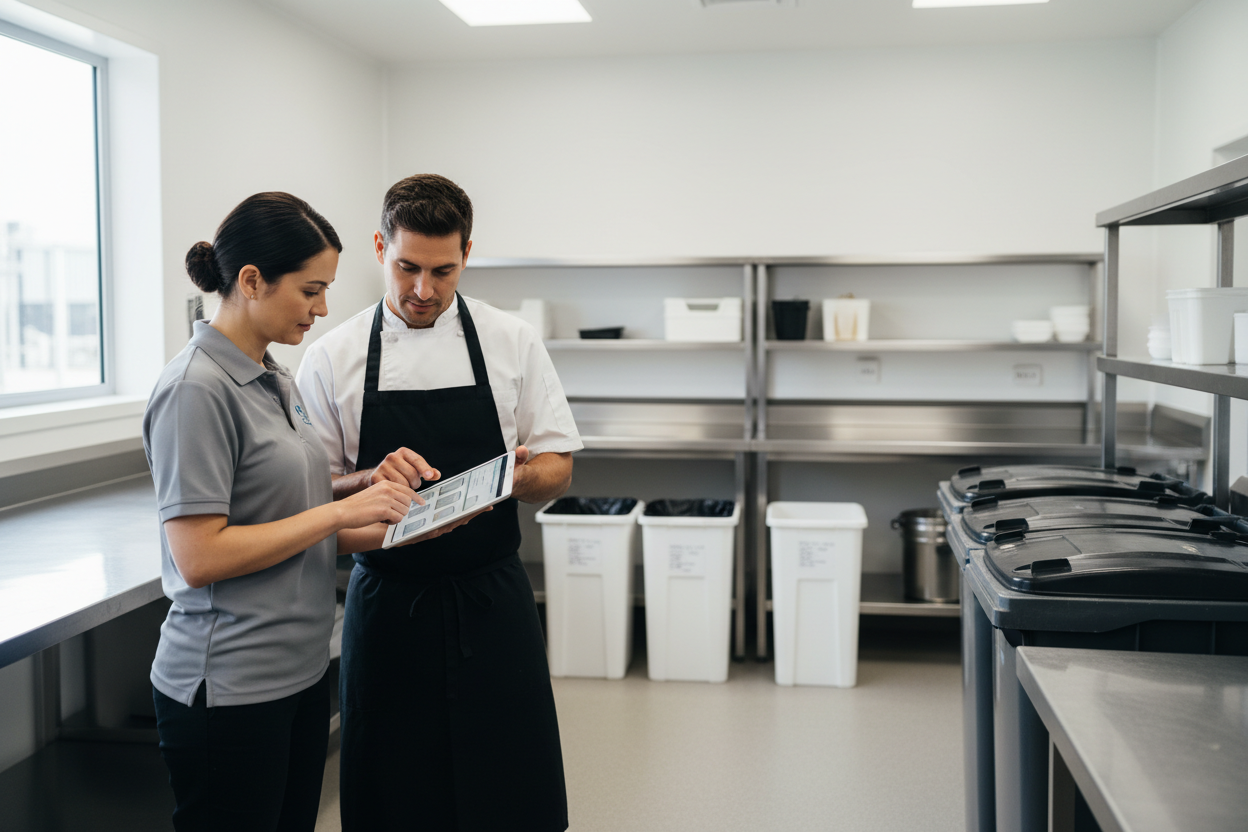
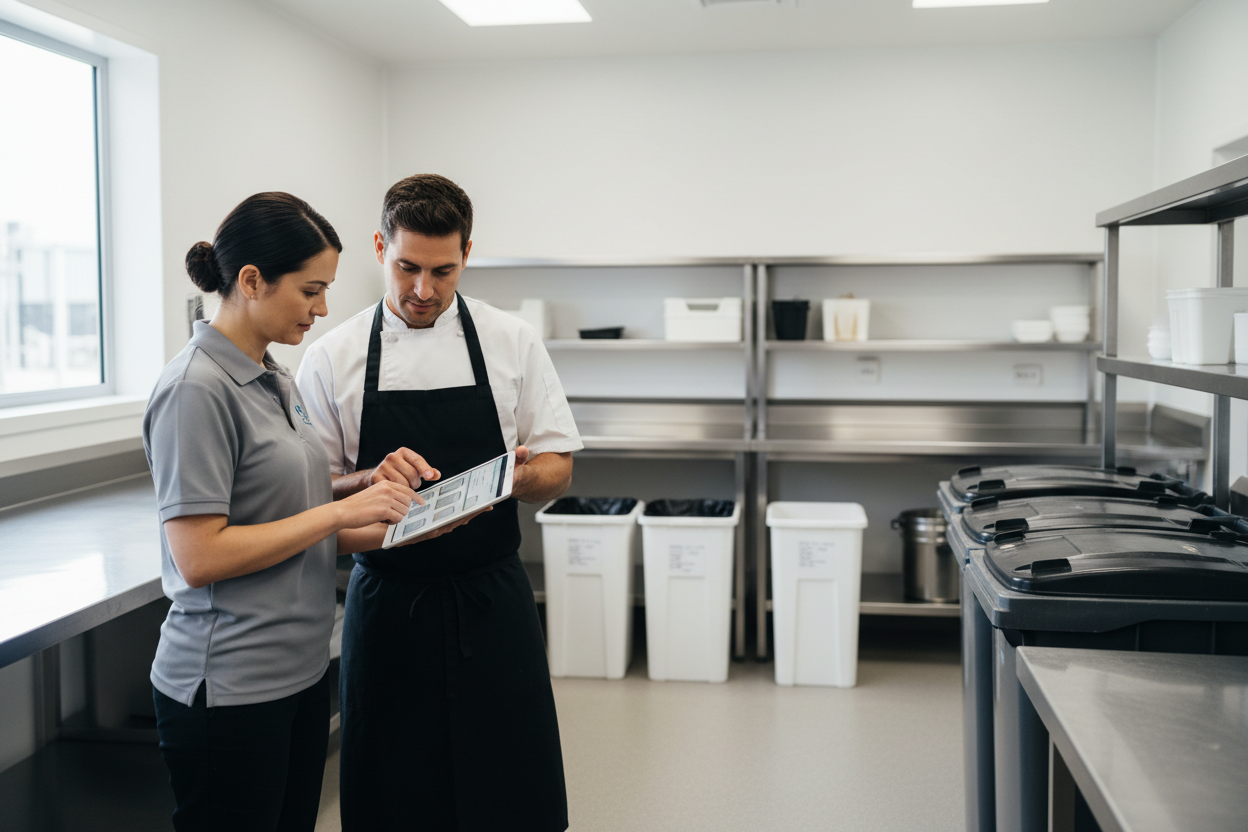
Buying for a business or organisation?
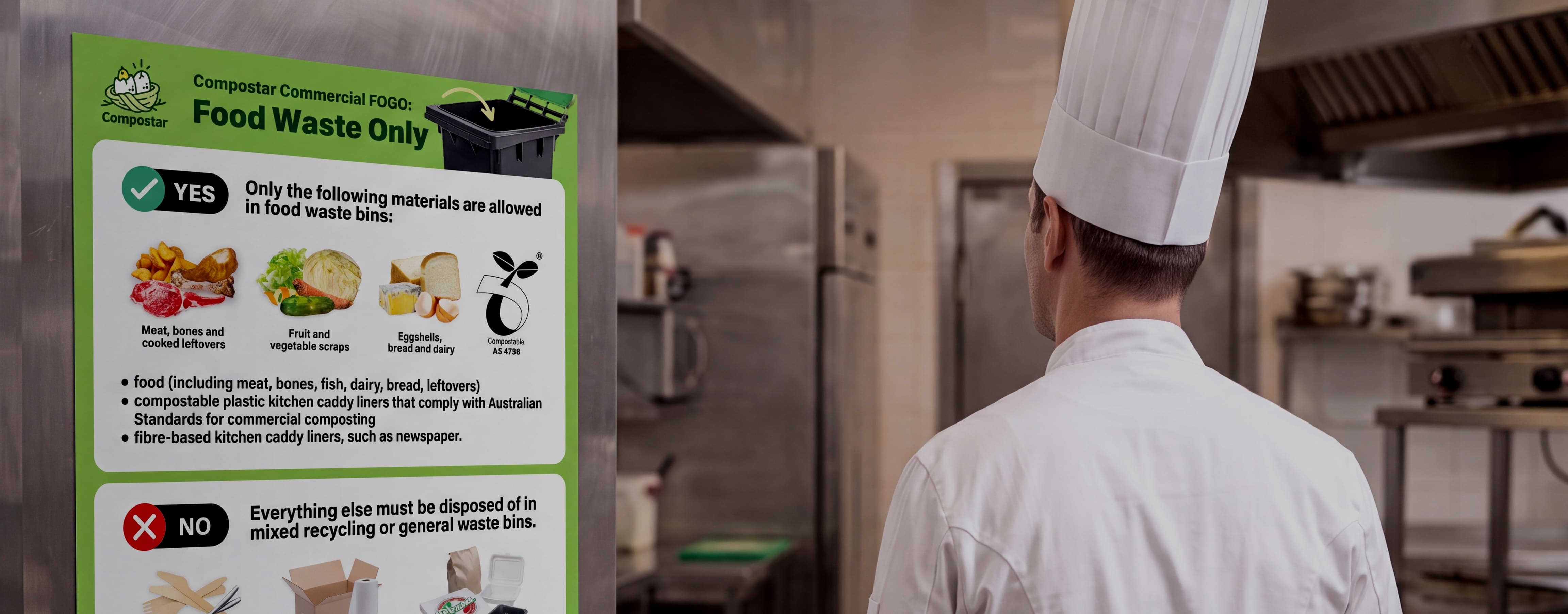
Explore certified compostable liners in 18L–240L sizes for food waste caddies, commercial kitchens and wheelie bins. Wholesale carton supply, samples and size support are available.
Aussie Household Essentials
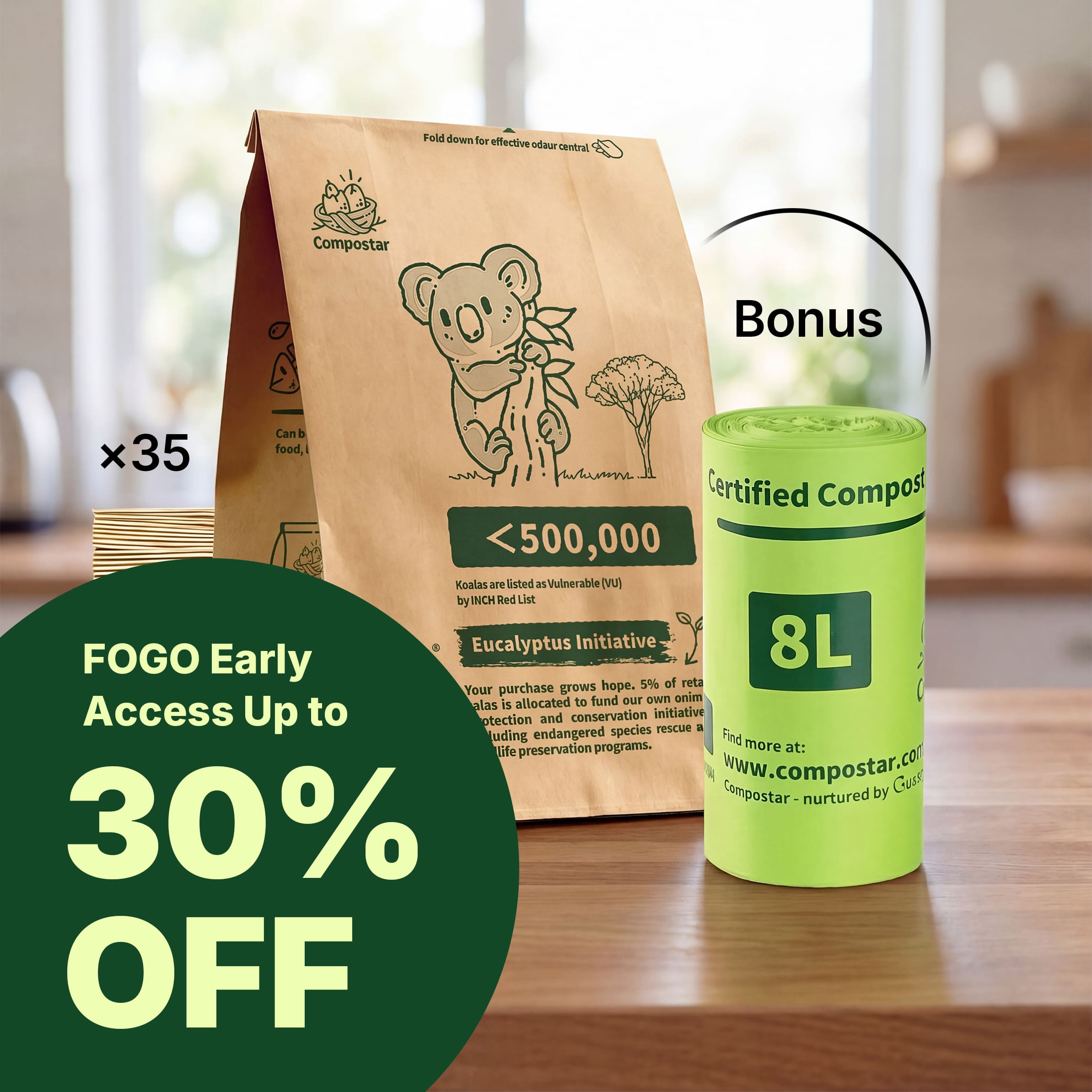


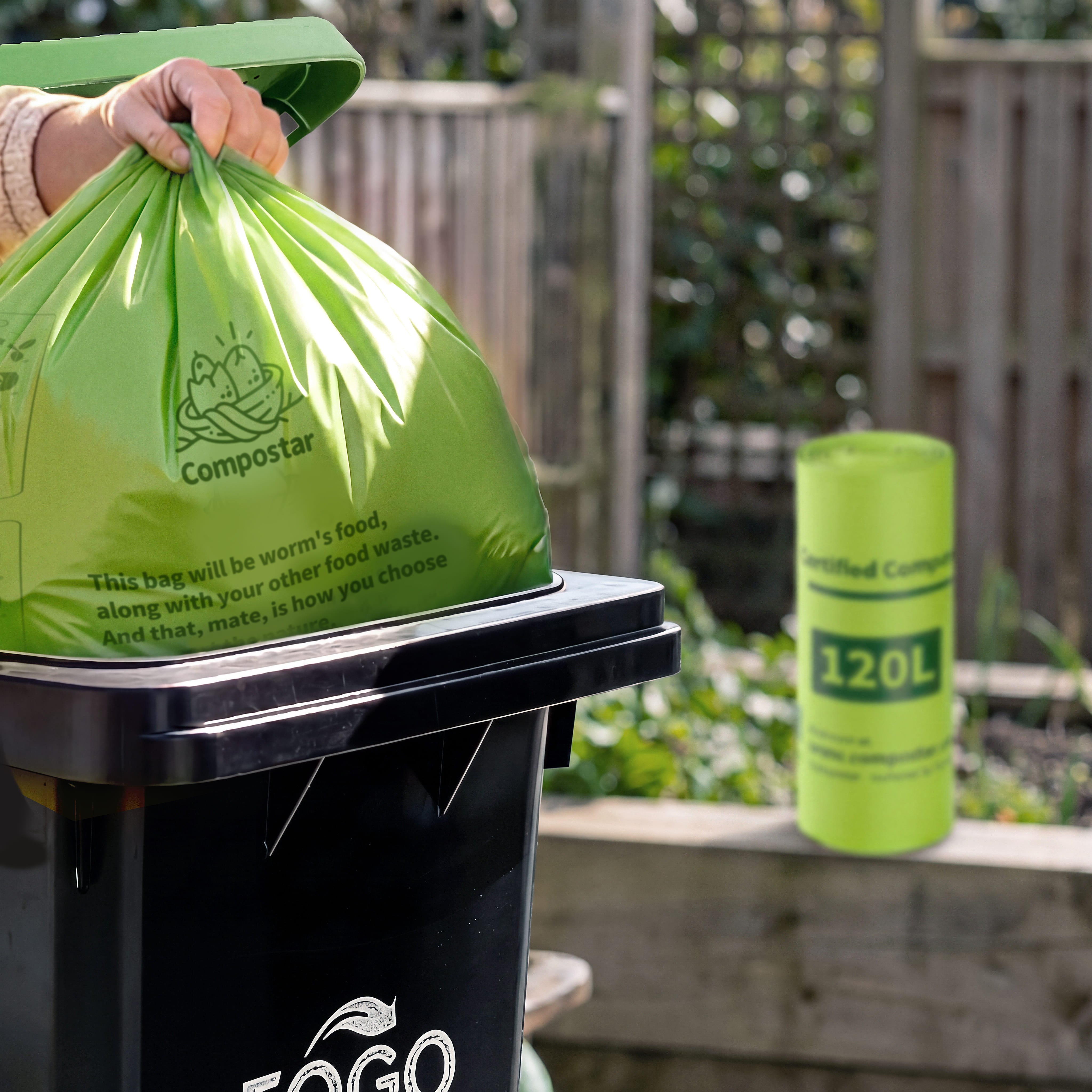


Aussie Community Content


Together for Nature
We started the Eucalyptus Initiative because we believe real change happens with real action.
For every purchase you make, we give 5% straight to our friends at Bangalow Koalas. It's more than a donation — it's our way of looking after the land we call home.Thank you for joining us.


Certified, Traceable & Verified.
Actually, anyone can print a logo. That's why we're 100% transparent with our ABAP License Numbers. It's the only way to be sure your bags meet Australian Standards (AS 4736 & AS 5810).
Your garden deserves the truth. Just enter our license numbers (10606 or 20458) on the ABA website to verify our certified compostability for yourself.
🔗 Verify our certification with the ABA
Note: Certification is listed under Guarden. Compostar is Guarden’s official direct-to-consumer brand, supplying genuine, factory-direct certified products.
Stop fighting your kitchen caddy. Discover how CompoStar's AS 4736 Certified kraft paper liners solve the top three council bin nightmares through advanced material science.
The Ultimate FOGO Bin Solution for NSW & VIC

Stop the "Stink Bomb"
Standard bioplastic liners act as sealed moisture traps, triggering foul anaerobic fermentation. Our kraft paper facilitates up to 44% moisture evaporation, promoting aerobic breakdown to naturally neutralise odours.
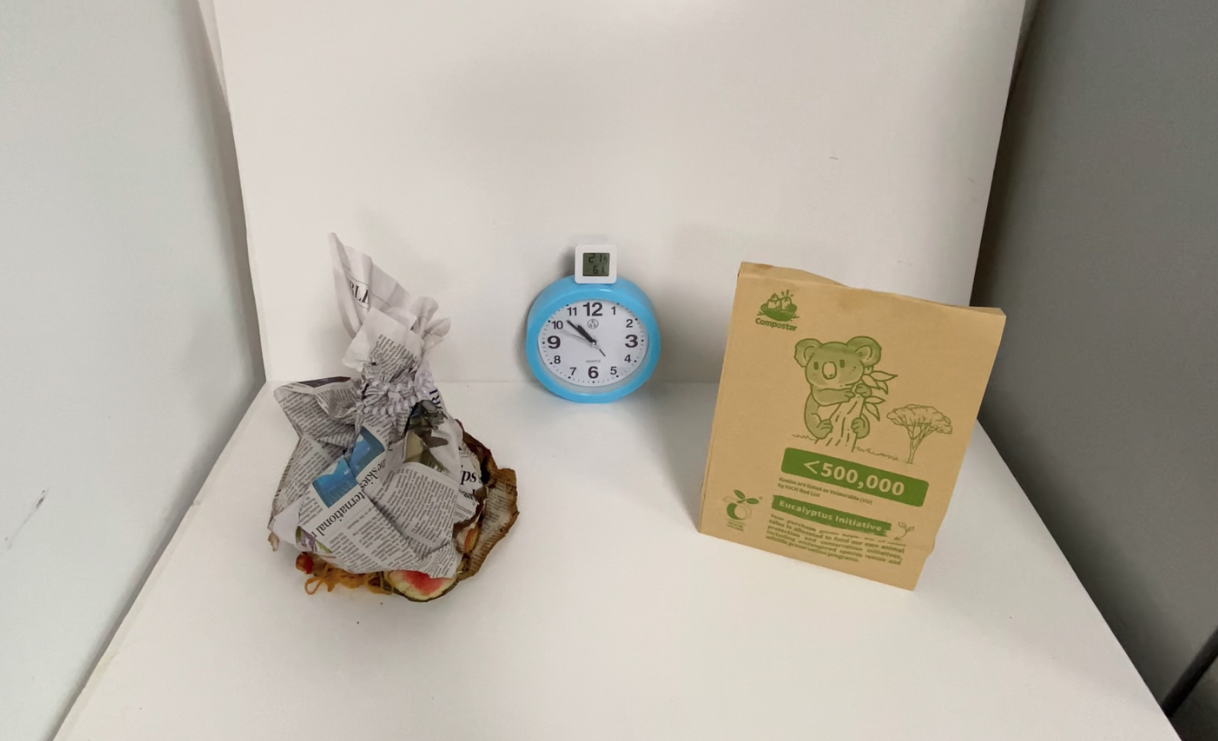
Zero "Bin Juice" Leaks
While standard newspaper turns to pulp, our liners are engineered with a high-density fibre matrix. Tested over a strict 70-hour empirical stress test with wet food waste, they deliver a 100% leak-proof experience.
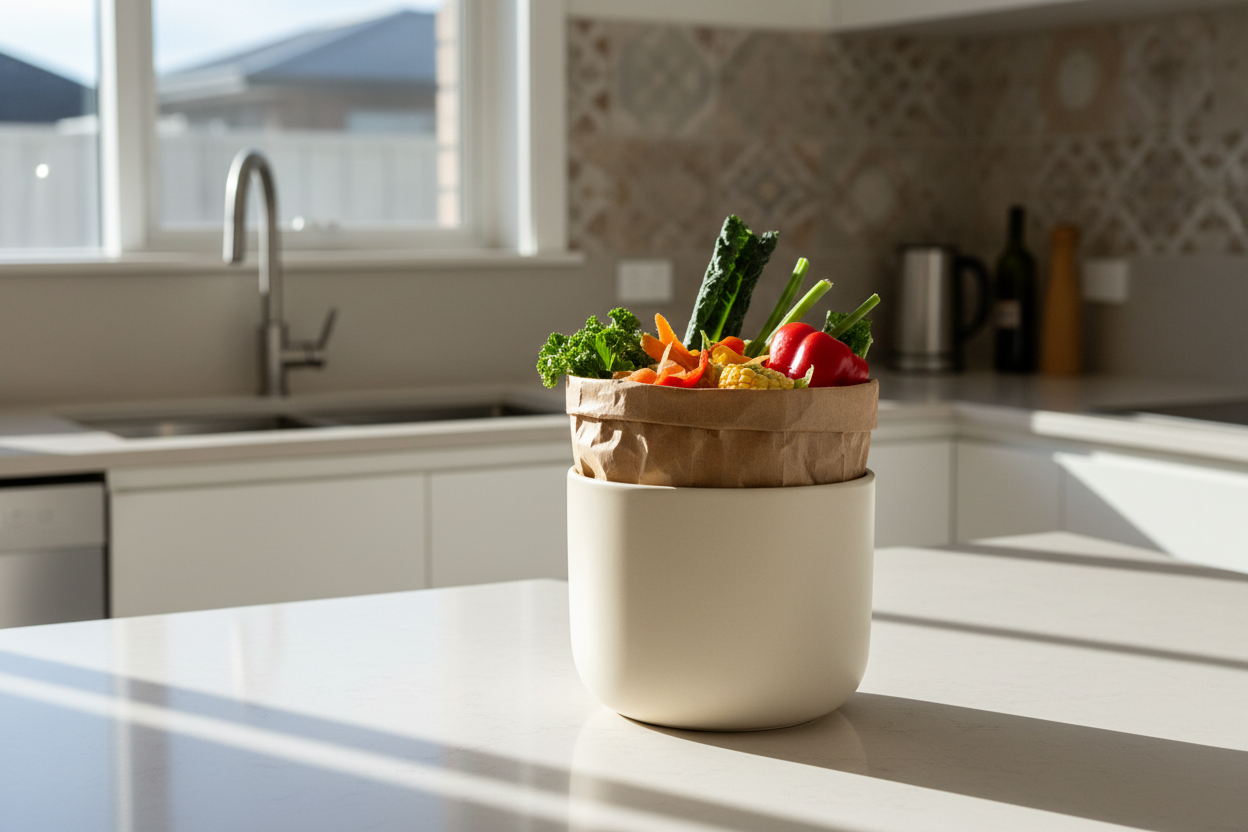
Break the Maggot Cycle
Fruit flies are biologically drawn to the acetic acid caused by trapped, fermenting wet waste. By actively drying out your FOGO rubbish, our breathable paper destroys the damp breeding ground pests require.
Backed by Real Australian Council Data
We didn’t just engineer a better bag; we solved a statewide crisis. We analysed over 500 real household comments from local councils across New South Wales and Victoria. The verdict is clear: standard council-supplied liners are failing.
Discover the real data behind the "slushy mess," the unbearable odours, and the pest infestations—and see why everyday Australians are permanently switching to our AS 4736 (Commercial) Certified Compostable paper bag.
Designed for Food Waste Collection in Green Bin Systems
Compostar liners are certified to AS 4736 industrial composting standards, supporting food waste diversion where liners are accepted.
Our liners meet recognised compostability requirements across Australia, including NSW and VIC, and are designed to work within food and garden organics collection systems.
(Always check your local council guidelines for green bin acceptance.)
Frequently Asked Questions
Are Compostar bags compliant with the 2026 FOGO mandates in NSW and VIC?
Yes, our bags are suitable for council green bin programs where permitted (always check your local guidelines) and certified to Australian Standards AS 4736. In 2026, using non-certified bags can lead to bin rejection or hefty fines for businesses. Compostar provides a reliable, compostable solution for every Aussie household and commercial kitchen.
What makes Compostar the most durable and reliable FOGO bag in Australia?
Compostar’s engineering significantly outperforms standard compostable film liners through three verified performance metrics:
- 10kg Industrial Strength: Tested with a 10kg solid iron dumbbell, our multi-layer paper technology maintains 100% integrity without tearing.
- 72-Hour Zero-Seepage Barrier: Verified to hold 500ml of liquid for 72 hours with no moisture penetration, keeping bins completely dry.
- High-Velocity Puncture Resistance: Survived a 30cm vertical drop test (3x) with a steel wine opener, proving it can handle sharp bones and seafood shells.
Beyond strength, our Foldable Odour-Lock system and breathable fiber technology prevent "bin-juice" smells by trapping odours physically—a feature loose-knotted plastic bags can't match. Fully AS 4736 certified and accepted by FOGO programs across NSW, VIC, SA, and QLD, Compostar is the ultimate choice for hygienic, heavy-duty food waste management.
Can Compostar liners be used for more than just the kitchen bin?
Absolutely! Our liners are designed for high-performance use beyond the kitchen. Thanks to our 72-hour waterproof and puncture-resistant technology, they are the perfect companions for:
- Camping & Caravanning: They lock in odors and prevent leaks, keeping your vehicle and campsite mess-free.
- Events & Gatherings: Robust enough to handle heavy volumes of food scraps from BBQs and parties without tearing.
Whether you're at home or in the great outdoors, Compostar ensures a clean, compostable cleanup.
Are Compostar paper liners accepted in Adelaide and South Australia?
Yes! Our paper liners are manufactured to meet the strict AS4736 Australian commercial composting standards, which are the benchmark for Green Industries SA.
While most councils across Adelaide and South Australia (such as Adelaide City, Burnside, and Marion) accept certified compostable paper in their FOGO bins, some local rules may vary. We always recommend checking the Which Bin SA website or your local council’s specific guidelines to ensure they accept paper liners in your area.
How do your bags solve the "Bin Juice" and fruit fly problem?
Unlike traditional plastic liners that trap moisture and heat, our leak-proof paper allows waste to breathe. This process naturally dries out food scraps, eliminating the foul-smelling "bin juice" and locking in odours. The freestanding design and fold-to-seal top also keep fruit flies away from your kitchen benchtop.
What is the best value way to buy Compostar bags?
Our 3-Month Subscription is the smartest choice. For just $49.90, you get a complete 90-day supply of strong FOGO bags and film liners delivered with FREE shipping Australia-wide (NSW & VIC).
Will the paper bag leak if I put wet food scraps in it?
No! Compostar bags are engineered with a reinforced, leak-proof square base. They are designed to handle wet kitchen waste — like watermelon rinds, leftover curries, and prawn shells — without breaking or leaking "bin juice" onto your benchtop.
Can I put these bags in my council FOGO green bin?
Our paper compost bags are officially certified to the Australian Standard (AS 4736). This means they are certified compostable and suitable for FOGO systems where permitted across Australia.
(Always check your local council guidelines for green bin acceptance.)
Why use paper bags instead of green cornstarch bin liners?
Plastic and cornstarch liners trap moisture, which causes food to rot quickly, creating terrible summer smells and attracting fruit flies. Our kraft paper keeping your waste drier, locking in odours, and stopping the mess. Plus, they never tear easily!
Do I need a kitchen caddy to hold the bag?
Not at all. Our bags feature a self-standing design. You can place them directly on your kitchen benchtop or under the sink. It saves space and means one less dirty bucket to wash!
Are Compostar paper bags actually leak-proof?
Yes. In a controlled 72-hour leak-proof test, Compostar bags held 500ml of liquid at room temperature (approx. 22°C) with zero seepage. This makes them ideal for wet kitchen scraps and "bin-juice" prevention.
How much weight can a Compostar FOGO bag hold?
Our industrial-grade paper bags are tested to support over 10kg of weight using a solid iron dumbbell. They are significantly stronger than standard compostable film liners which often stretch or break at 3-4kg.
Can I put sharp bones or seafood shells in these bags?
Absolutely. Our Puncture Resistance Test proves that the reinforced paper base resists piercing from sharp objects like chicken bones and shells. This is a critical advantage over thin film bags.
How does temperature affect the bag?
Unlike bio-plastic liners that can melt or become brittle, our paper bags remain stable in typical Australian kitchen temperatures and are designed for consistency in diverse climates from Sydney to South Australia.
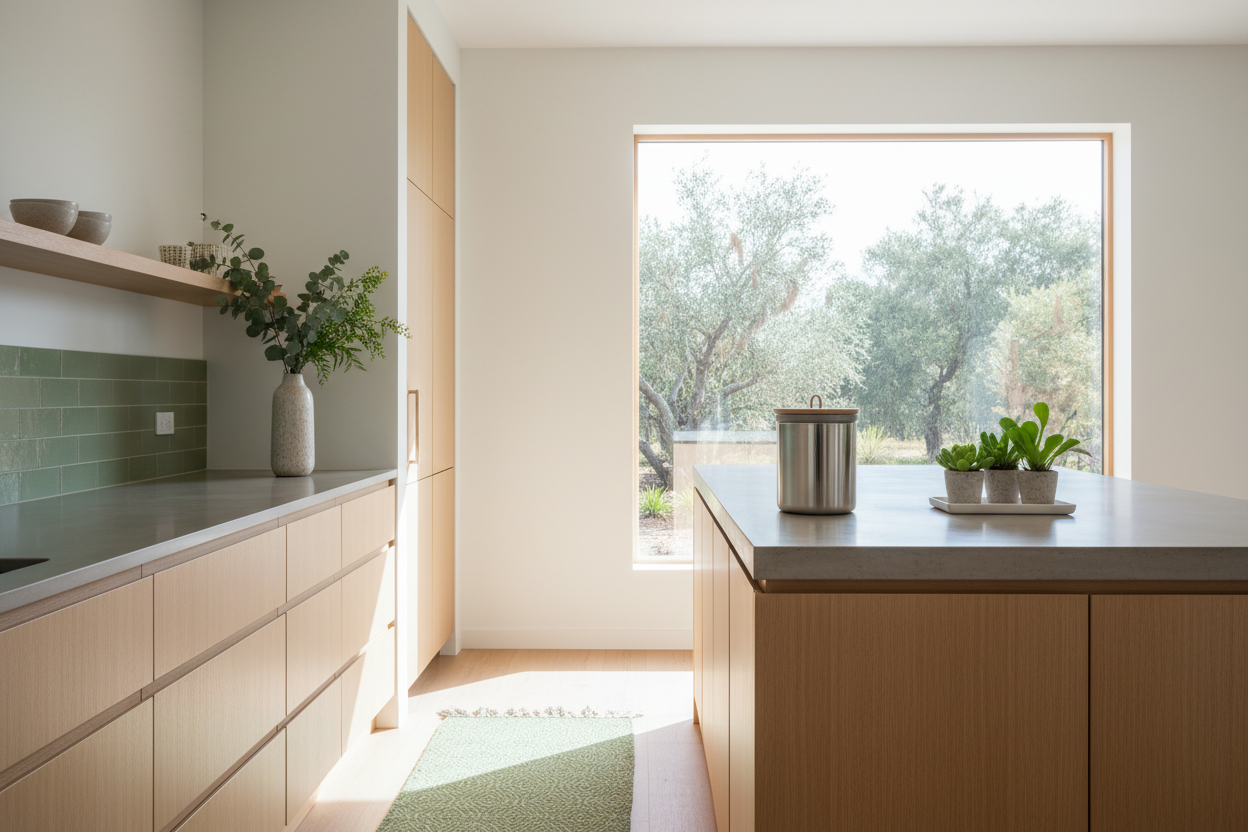
Leave No Trace. Leave No Smell
Whether you are fighting 40°C bin juice at home or packing out prawn shells from a remote campsite, our Ultimate Guide shows you how to handle organic waste like a pro.
Your Small Swap, Our Massive Australian Impact

500kg CO2-e Cut
Stop methane in its tracks. Every time you use my robust FOGO bags instead of plastic in your Sydney or Melbourne kitchen, you’re literally keeping emissions out of the air. It’s like taking a car off the road for 2 months—just by changing your bag.

Protect 45m² of Aussie Land
Protect the land we love, from Adelaide backyards to pristine SA camping sites. A year’s worth of plastic bags takes up a studio apartment in landfill. By switching to my self-standing small bin liners, you’re turning waste into soil, not trash.

Absolutely Zero Microplastics
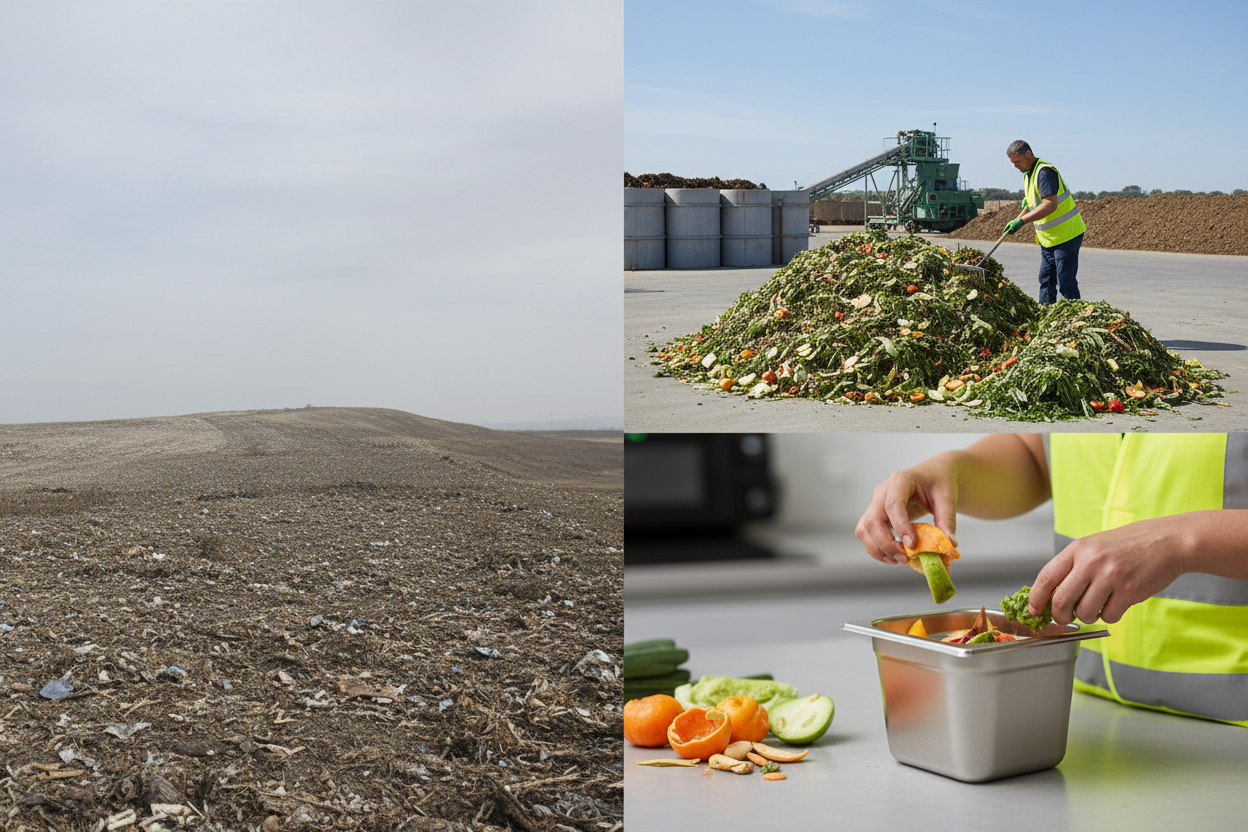
Leave no trace at your next gathering. While "biodegradable" plastics break into toxic microplastics, my 72-hour waterproof and puncture-resistant paper bags break down 100% into the earth. Zero plastic left behind—just healthy Aussie soil.
FOGO Made Effortless
Stand-Alone & Ready
Pop it open on your benchtop. Thanks to the flat bottom, it stands on its own — no messy kitchen caddy needed.
Toss in Your Scraps
Toss in your wet scraps, tea bags, and leftovers. Our tough kraft paper handles the moisture without tearing or leaking on your floors.
Fold, Toss, Done.
Just fold down the top to lock in odours, and toss the whole thing straight into your FOGO green bin. No mess, no stress.
Why We Act: Our Warming Australia
2026 Victorian bushfires are not a coincidence — they are a consequence of a warming climate.
Carbon emissions are the root driver of global warming. Beyond fossil fuels, industrial pollution, and deforestation, high-carbon linear consumption — especially plastic waste — continues to fuel climate disasters.
Australia's warming reality:
• Since 1910, average temperatures have risen by ~1.51°C
• Every decade since the 1950s has been warmer than the last — a 70+ year accelerating trend
At around 1.5°C of warming, severe climate impacts are already here — with escalating bushfire risk among the most devastating.
Citations:
1.State of the Climate 2024 (https://www.bom.gov.au)
2.National Climate Statement (https://www.climatechangeinaustralia.gov.au)
72-Hour Leak-Proof FOGO Bags: The Ultimate Essential for Kitchens & Camping
Welcome to Compostar—I started this brand to solve the mess that Aussie families hate. From daily food scrap disposal in Sydney to heavy-duty use in Melbourne kitchens, our small bin liners are the robust alternative to flimsy plastic. Say goodbye to leaky green liners, disgusting bin juice, and nasty summer smells once and for all.
Our AS 4736 certified paper bags aren't just for the caddy; they are puncture-resistant and portable enough for camping trips in SA and backyard gatherings in Adelaide. Featuring a reinforced base and my unique 'Fold & Lock' seal, Compostar ensures your waste—from coffee grounds to sharp seafood shells—stays dry and odourless for 72 hours, making sustainability easy, one dry bag at a time.
I built these bags to be the ultimate portable essential for kitchens, camping trips, and backyard gatherings. Engineered with 72-hour waterproof technology and a puncture-resistant body, our bags handle the toughest scraps without a leak. From Sydney to Adelaide, use my 'Fold & Lock' secret to seal in odors and keep flies away. It’s the smell-proof small bin liner you can trust in Melbourne, SA, and across Australia.