
Community-Tested Compostar FOGO Bags: Real-World Leak, Strength & Odour Results
See real-world creator-led and community-use tests of Compostar reinforced kraft paper FOGO bags.See how Compostar reinforced kraft paper FOGO bags performed in real kitchen and creator-led tests, including a 72-hour liquid-hold trial, a 10kg static load test and puncture-resistance demonstrations. Results are shown with test conditions, observed outcomes and practical use limits for Australian FOGO caddies, kitchens and camping food waste.
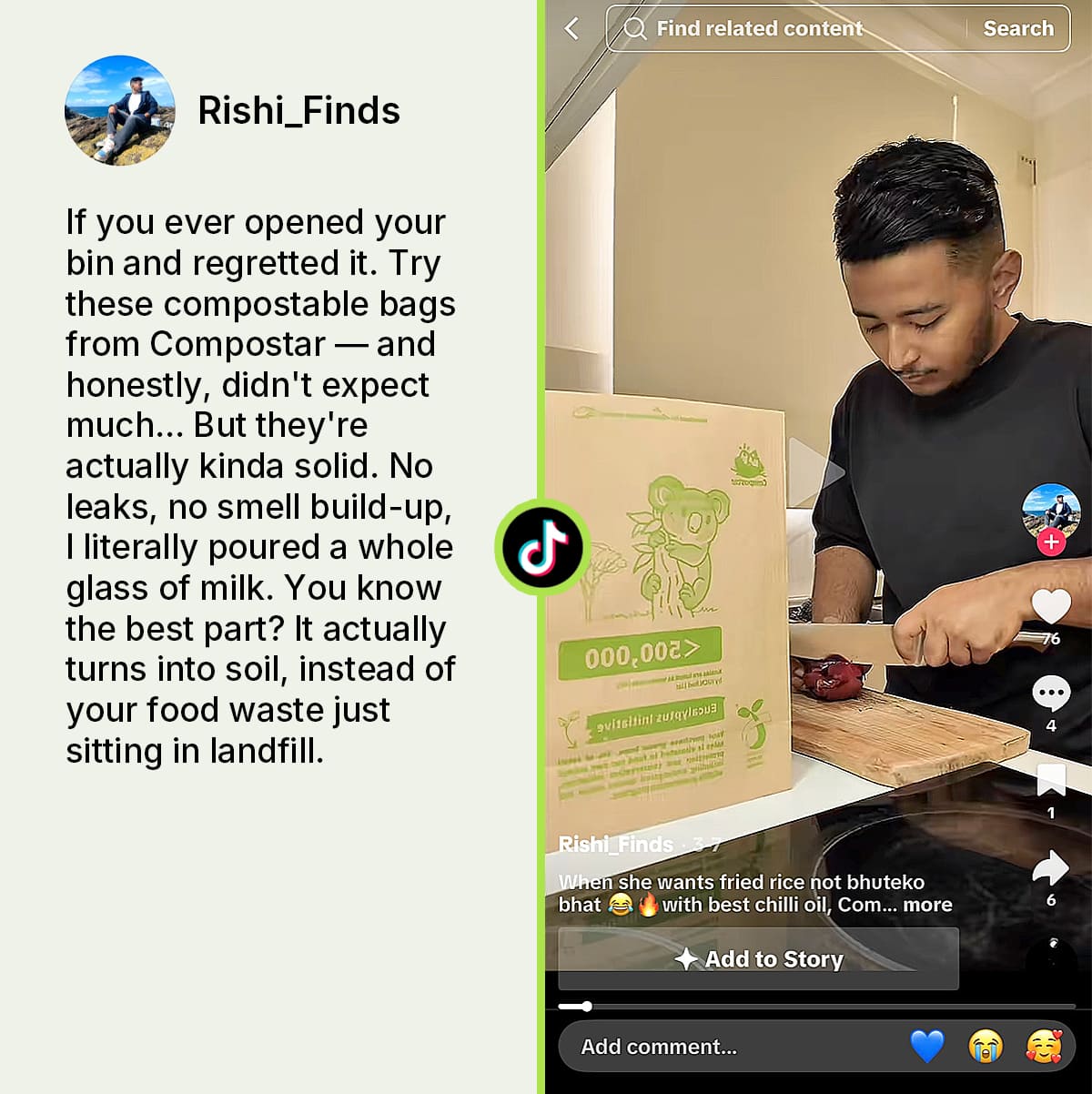
The Ultimate Milk Leak-Test by Rishi_Finds
Can a paper bag really hold liquid? Creator Rishi_Finds put Compostar to the test by pouring a full glass of milk directly into the bag. Observed result: In the recorded test, the bag held approximately 500ml of liquid for 72 hours with no visible seepage. This result reflects the stated test conditions and should not be read as a recommendation to store free liquid in the bag long-term. As Rishi says, it's 'actually kinda solid' for anyone tired of bin juice disasters.
Creator: Rishi_Finds
Scenario: 72-hour liquid-hold test
Test material: Approx. 500ml milk
Duration: 72 hours
Observed result: No visible seepage in the recorded test
Use note: Designed for food scraps and FOGO caddy use, not long-term liquid storage
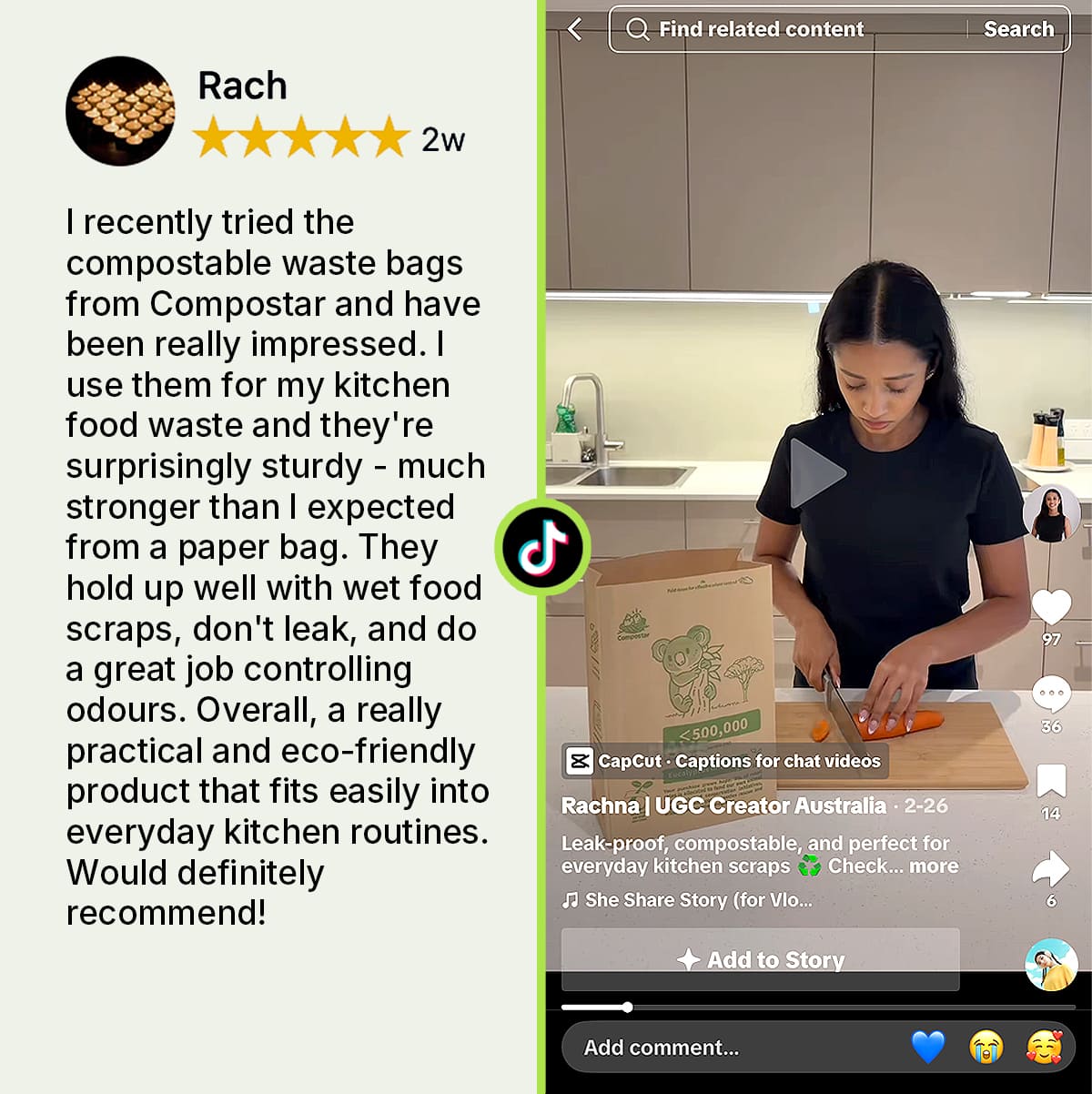
Sturdy & Odour-Free: Rach’s Kitchen Review
Rach used the bag during a regular kitchen routine with wet food scraps and sharper food edges. The recorded use case focuses on everyday bench-caddy handling, tear resistance and odour control during short-term indoor food waste storage.
Observed result: The bag maintained its structure during the recorded kitchen-use test, with no visible tearing or leaking shown in the video.
Rach used the bag during a regular kitchen routine with wet food scraps and sharper food edges. The recorded use case focuses on everyday bench-caddy handling, tear resistance and odour control during short-term indoor food waste storage.
Observed result: The bag maintained its structure during the recorded kitchen-use test, with no visible tearing or leaking shown in the video.
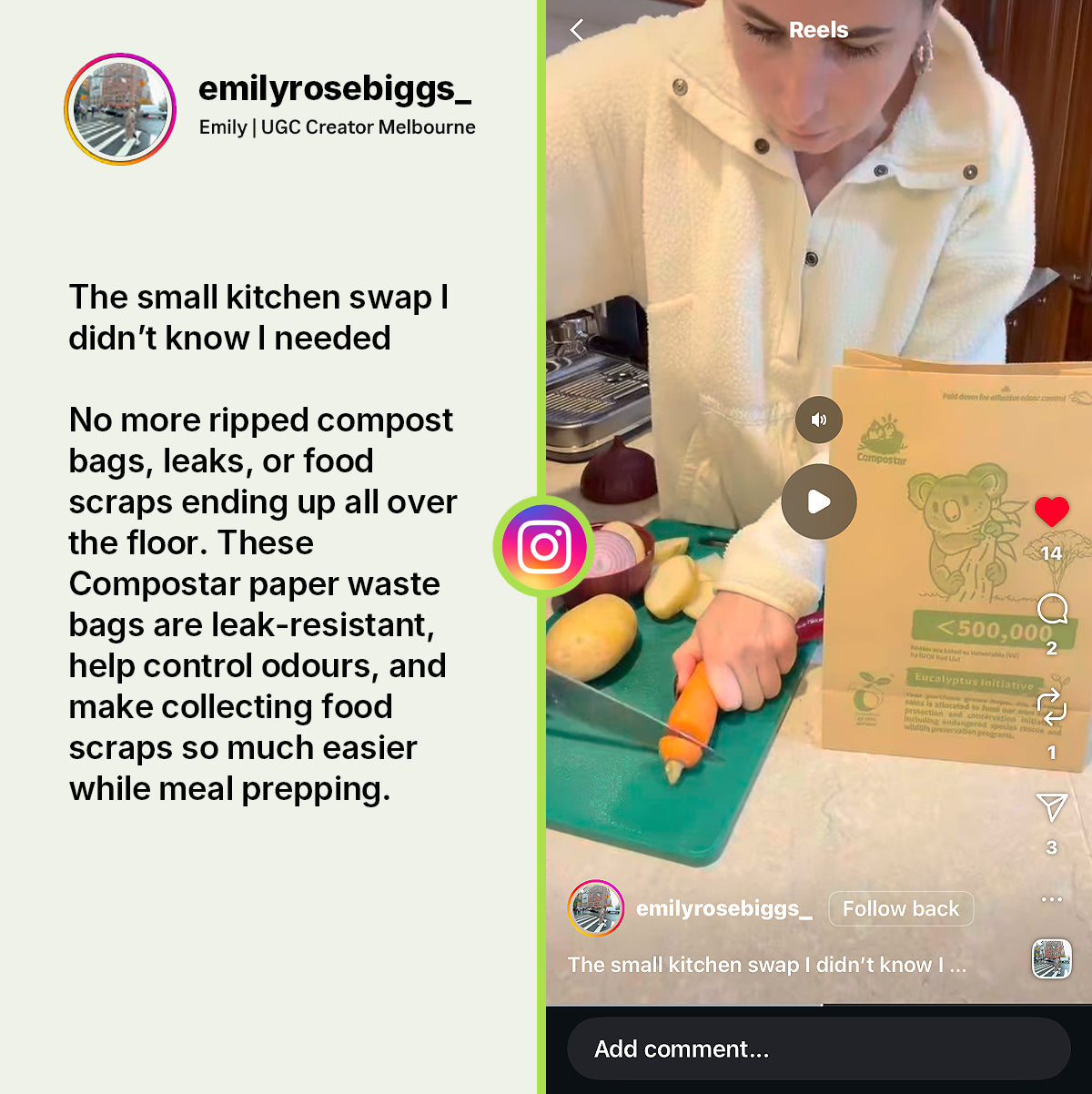
The "Zero-Spill Benchtop" Test by emilyrosebiggs
Tired of messy food scraps and rotting smells? Melbourne-based creator emilyrosebiggs_ put Compostar to the test during her meal prep. Emily used the bag during meal prep to collect wet food scraps on the kitchen bench. The recorded use case focuses on short-term food scrap handling, visible leak control and everyday kitchen cleanliness. As Emily notes, our breathable paper makes collecting food scraps effortless while cooking.
Emily used the bag during meal prep to collect wet food scraps on the kitchen bench. The recorded use case focuses on short-term food scrap handling, visible leak control and everyday kitchen cleanliness.
Observed result: During the recorded meal-prep use case, the bag showed no visible spills or tearing. The breathable paper structure may help reduce trapped moisture compared with sealed plastic-style liners, which can support better short-term odour management in kitchen caddies.
Why Paper Food Waste Bags Can Help with Moisture, Odour and Caddy Cleanliness
Why Paper Food Waste Bags Can Help with Moisture, Odour and Caddy Cleanliness
Food waste problems usually start with moisture. When wet scraps sit in a sealed or poorly ventilated liner, liquid can collect at the bottom of the caddy. This can lead to bin juice, stronger odours, weaker liners and conditions that may attract fruit flies or maggots.
Compostar’s reinforced kraft paper bags are designed to manage these everyday FOGO problems through breathable paper, wet-strength structure and a fold-over closure. The goal is not to mask food waste smells with fragrance, but to help reduce trapped moisture and support cleaner short-term food scrap storage.

Moisture and odour control
The Science of Breathability
Standard film-style liners can trap humidity around food scraps. This may encourage anaerobic breakdown, which is one reason kitchen caddies can start to smell after one or two days.
Breathable paper can help release excess moisture during short-term indoor storage. Research referenced in our odour-control guide found that paper food-waste bags supported greater moisture loss than compostable bioplastic bags under household storage conditions.
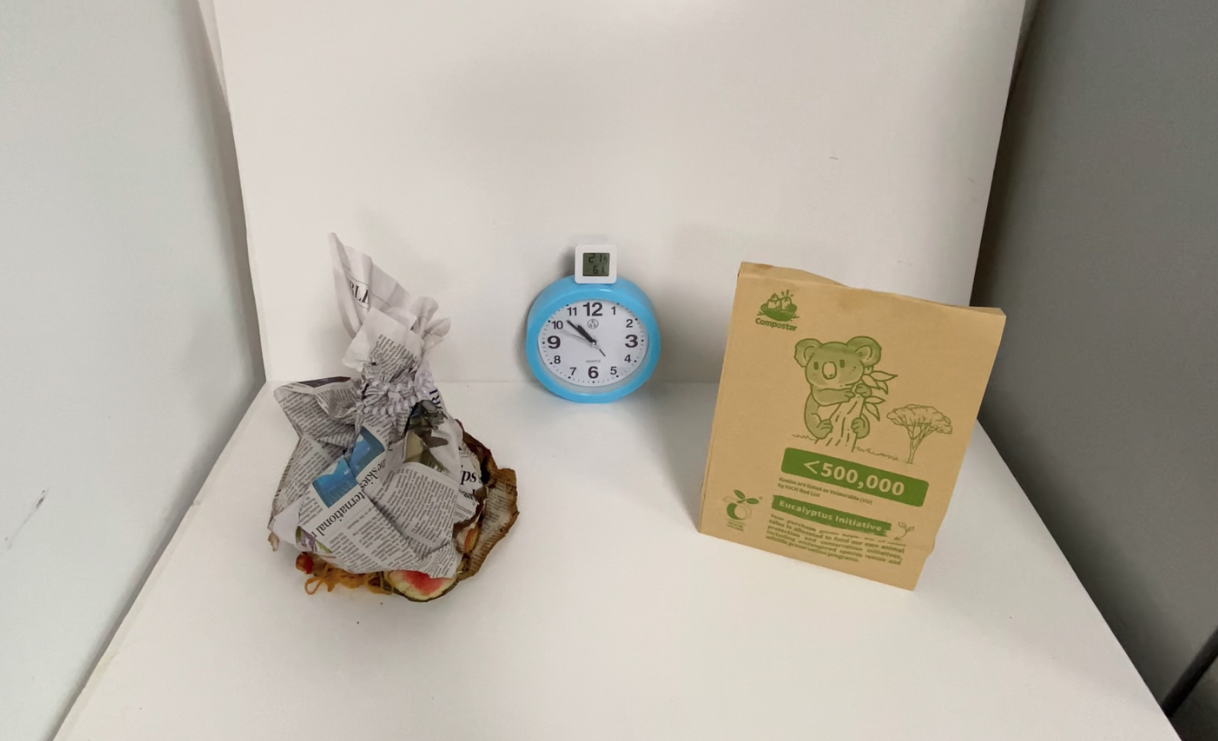
70-Hour Wet Strength Test
The Science of Structural Integrity
Ordinary newspaper can absorb moisture, but it may lose structure when exposed to wet scraps for too long. That is why wet strength matters for food waste collection.
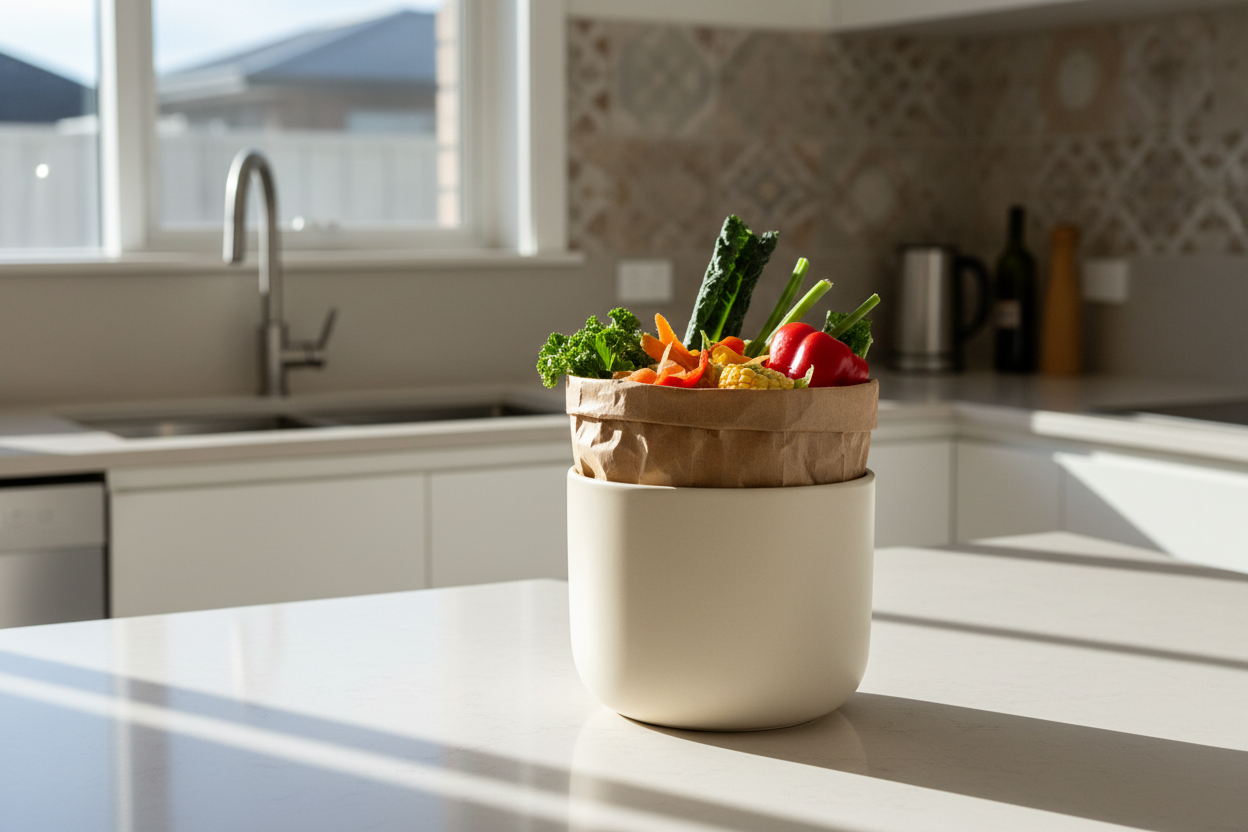
In Compostar’s 70-hour wet-strength test, the bag was tested with typical wet FOGO materials including watermelon, coffee grounds, tea bags and food scraps under indoor conditions. The purpose of the test was to check whether the paper structure could hold damp food waste without visible base failure during the stated test period.
Reducing the Conditions That Attract Pests
The Science of Pest Prevention
Fruit flies and maggots are often linked to exposed, wet or fermenting food waste. A food waste bag cannot remove every pest risk, because temperature, cleaning frequency, bin lids and collection timing still matter.
However, reducing pooled moisture and better containing food scraps may help lower the wet, smelly conditions that attract pests.
Council & Community FOGO Pain Points
The Science of Australian Waste Management
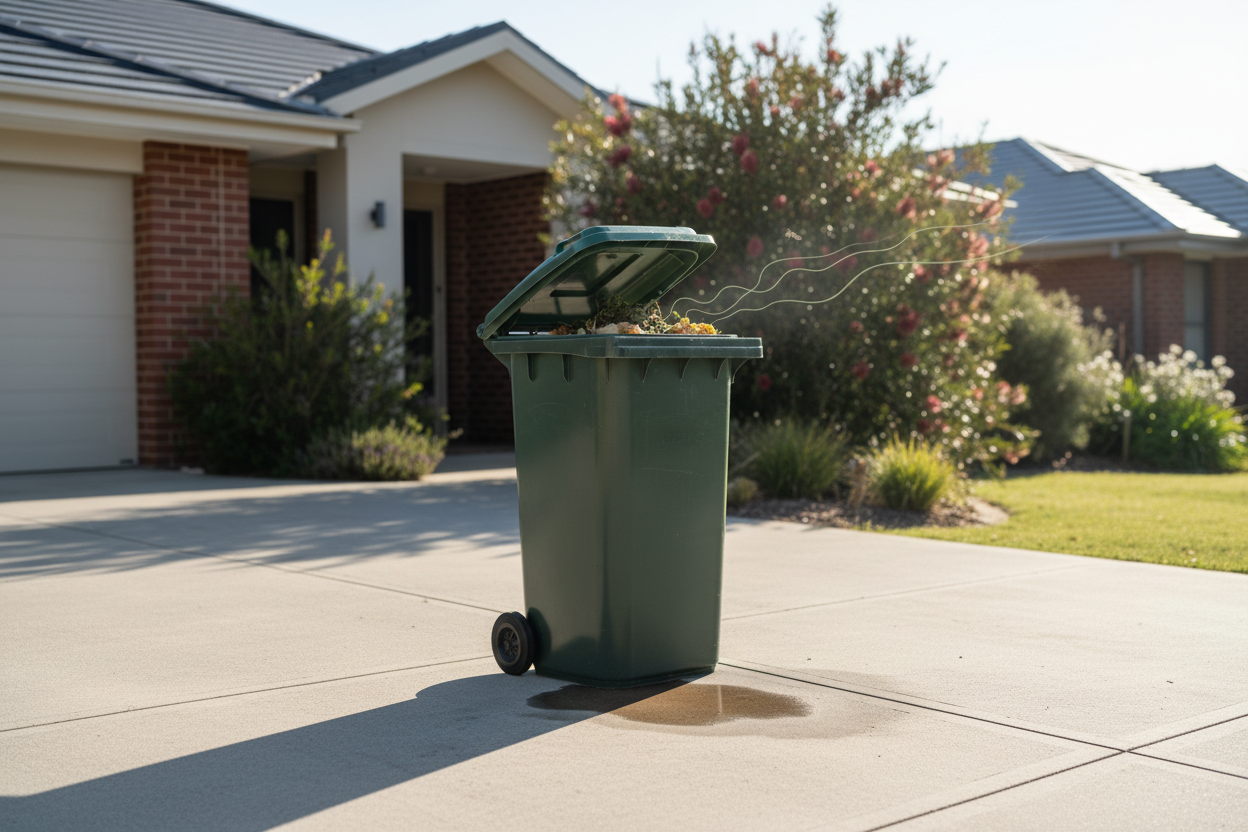
We reviewed 500+ publicly available council and community comments about FOGO caddies, bin smells, leaks, maggots and food waste handling. The strongest pattern was that moisture sits behind many everyday complaints: bin juice, odour, weak liners, pests and confusion about how to manage food scraps cleanly.
What 500+ Council & Community Comments Reveal About FOGO Problems
We reviewed 500+ publicly available council and community comments about FOGO caddies, food waste smells, leaks, maggots and confusion around liner rules. The recurring issues were grouped into the themes below.
| Theme | Common complaint from residents | Why it matters for food waste bags |
|---|---|---|
| Moisture & bin juice | Food scraps release liquid, creating wet caddies, stained benches and messy green bins. | A wet-strength paper structure helps hold damp food scraps and reduce visible seepage during short-term caddy use. |
| Odour | Indoor caddies start to smell after storing food scraps, especially in warm weather. | Breathable paper and a fold-over closure may help reduce trapped moisture and contain food scrap smells during short-term storage. |
| Fruit flies & maggots | Fruit flies and maggots appear when food scraps sit in a warm, wet caddy or bin. | Reducing pooled moisture and exposed wet residue may help lower the conditions that attract pests, alongside regular cleaning and lid control. |
| Bag tearing or collapse | Some liners tear, sag or fail when used with heavy scraps, coffee grounds, fruit peel or leftovers. | Reinforced paper and wet-strength testing help show whether the bag can handle everyday wet food waste without visible base failure. |
| Council rule confusion | Residents are unsure whether compostable liners, paper bags or no liners are allowed in their local FOGO bin. | Clear certification details and local council-use guidance help users check whether certified liners are accepted before disposal. |
| Outdoor and camping use | Food scraps from camping, picnics or BBQs can leak, smell or attract pests before disposal. | Paper food waste bags can support short-term collection of meal-prep scraps, provided they are stored properly and disposed of according to local site rules. |
FAQ: Compostar Paper FOGO Bags, Leaks, Odour & Council Use
Do Compostar FOGO bags leak with wet scraps?
Compostar bags have been tested with wet food scraps and a 72-hour liquid-hold scenario. In the recorded 500ml liquid test, no visible seepage was observed. They are designed for food scraps, not for long-term free-liquid storage.
Are these paper bags strong enough for sharp food waste?
They have been tested against selected puncture scenarios, including sharp household food-waste simulations. Avoid overloading the bag or using it for large bones, shells or sharp non-food items.
Can I use these for camping in the Australian heat?
They may be useful for collecting food scraps during camping, picnics and outdoor meal prep. Store used bags in a shaded area and dispose of them according to the site’s waste rules.
Are they compliant with Australian Council regulations?
Compostar products should be used according to their certification scope and local council rules. Some councils accept certified compostable liners in FOGO bins, while others have different requirements. Always check your council’s FOGO guidance before disposal.
Council Compatibility & National Standards
Compostar bags are designed for Australian food waste collection and certified compostable use, subject to the certification scope of each product and the acceptance rules of each local council.
- Certified Standard: Fully compliant with AS 4736 (Industrial Compostable) and AS 5810 (Home Compostable).
- Council acceptance varies by location. Some councils accept certified compostable liners in FOGO bins, while others require loose food scraps or have specific liner rules. Please check your local council’s FOGO guide before placing any liner in the green bin.
- Compostability note:Certified compostable products are designed to break down under the conditions required by the relevant compostability standard. Actual processing depends on the composting facility, collection system and local council rules.
Puncture-Resistance Tested
10kg Static Load Tested
72h Liquid-Hold Tested