

Not every "green" bag is suitable for food waste collection.
For homes, cafés, restaurants, commercial kitchens and NSW FOGO programs, the difference between biodegradable, compostable and certified compostable matters.
A bag can look environmentally friendly and still be unsuitable for organics recycling. That is why Australian compostability standards such as AS 4736 and AS 5810 are important.
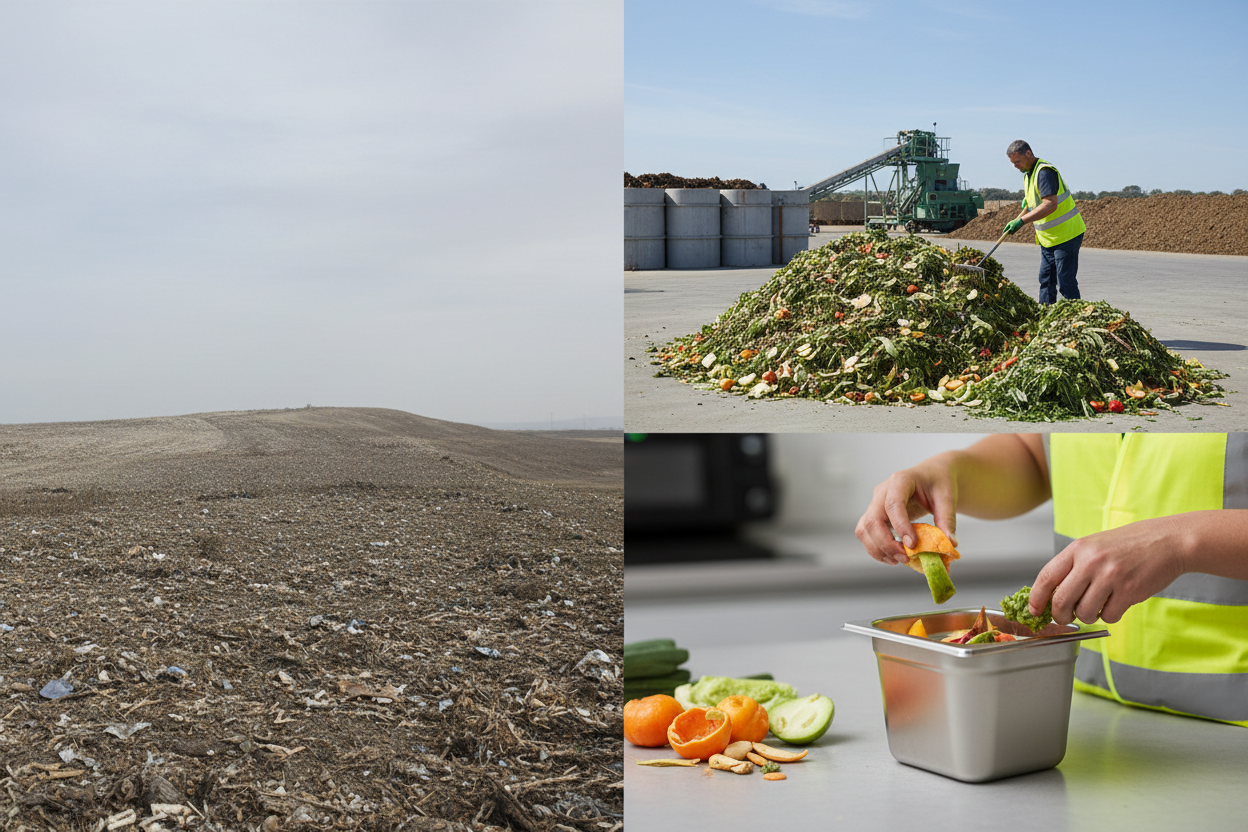
Food waste does not belong in landfill
Food waste in landfill is a major waste problem.
When food scraps are mixed into general waste, they are harder to recover and reuse. They also increase the amount of organic material being sent to landfill instead of being turned into compost or other beneficial outputs.
The NSW EPA explains that separating food waste from general waste can help businesses reduce waste disposal to landfill, improve operations, reduce carbon footprint and divert food waste for beneficial reuse. Learn more from the NSW EPA business food waste guidance.
For food businesses, this means food waste separation is not just an environmental idea. It is becoming part of everyday waste management.
View AS 4736 and AS 5810 Certified Bulk Compostable Bin Liners
Why the right liner matters
Food waste separation depends on behaviour.
Staff and customers need to know where food scraps go. Bins need to be easy to use. Liners need to match the bin size and the collection pathway.
If the wrong bag is used, it can create problems such as:
- contamination
- plastic residue in organics streams
- confusion for staff
- rejection by waste contractors
- poor composting outcomes
- greenwashing risk
- extra sorting or processing work
That is why choosing certified compostable bin liners matters.
Biodegradable is not the same as compostable
One of the biggest sources of confusion is the word "biodegradable".
A biodegradable bag is not automatically suitable for FOGO, food waste collection or commercial composting. Some biodegradable products may break down under certain conditions, but not necessarily within the required timeframe or in the correct end-of-life system.
Compostable claims should be tied to a recognised standard.
In Australia, the relevant compostability standards include:
| Standard | Main Composting Environment | Typical Meaning |
|---|---|---|
| AS 4736 | Commercial / industrial composting | Product is verified for commercial composting conditions |
| AS 5810 | Home composting | Product is verified for home composting conditions |
| No recognised certification | Unclear | Risk of vague biodegradable or green claims |
The ABA explains that AS 4736 relates to plastics suitable for commercial composting, while AS 5810 relates to plastics suitable for home composting.
View AS 4736 and AS 5810 Certified Bulk Compostable Bin Liners
What AS 4736 means
AS 4736 is the Australian Standard for commercial composting.
A product certified to AS 4736 is designed to break down under commercial composting conditions, where temperature, moisture, oxygen and processing conditions are controlled.
For food waste bin liners, AS 4736 is especially important because many FOGO and organics systems are connected to commercial composting or organics processing facilities.
Businesses searching for AS 4736 compostable bin liners should look for clear certification information, not vague environmental wording.
Learn more: ABA
What AS 5810 means
AS 5810 is the Australian Standard for home composting.
A product certified to AS 5810 is designed to break down in home composting conditions. This can be useful for household composting, but it should not be confused with automatic acceptance in every council FOGO program.
The ABA explains that a certificate of conformance to AS 4736 or AS 5810 does not guarantee acceptance in every composting system. Acceptance depends on recycler acceptance, contamination, processing technology, collection systems, infrastructure, regulations and local council guidelines.
This is important for businesses. Certification is essential for trust, but local acceptance still needs to be checked.
View AS 4736 and AS 5810 Certified Bulk Compostable Bin Liners
Certification and acceptance: what businesses should check
| Question | Why It Matters | What to Check |
|---|---|---|
| Is the liner certified? | Avoids vague biodegradable claims | Look for AS 4736 or AS 5810 certification where relevant |
| Is the liner suitable for commercial composting? | Important for many FOGO and organics systems | Check AS 4736 certification |
| Does the local collection system accept liners? | Certification does not guarantee acceptance everywhere | Ask council, waste contractor or processor |
| Is the liner the right size? | Poor fit can cause leaks and staff handling problems | Match caddy, kitchen bin or wheelie bin size |
| Is staff guidance clear? | Wrong disposal can contaminate the stream | Use signage and simple instructions |
Test data and Compostar product specifications
Compostar's certified compostable bin liner range supports different food waste collection points.
| Compostar Size | Thickness | Typical Use | Certification Relevance |
|---|---|---|---|
| 10L | 20 micron | Caddies, café counters, office kitchens | Suitable where certified compostable food waste liners are accepted |
| 18L | 20 micron | Caddies, café counters, office kitchens | Suitable where certified compostable food waste liners are accepted |
| 36L | 24 micron | Small food waste bins, staff kitchens, food stations | Supports small commercial food waste collection |
| 80L | 26 micron | Wet food waste and back-of-house bins | Supports heavier commercial kitchen food waste |
| 120L | 26 micron | Wheelie bins and FOGO transfer | Suitable for larger food waste movement |
| 240L | 26 micron | Large wheelie bins and waste rooms | Designed for larger commercial food waste collection and high-volume waste room use |
View AS 4736 and AS 5810 Certified Bulk Compostable Bin Liners
Failure lesson: choosing a "green" bag without checking certification
We tried looking at compostable bags only from the packaging claim.
The result was risky.
A bag can look green, use environmental wording and still not be suitable for a specific organics collection system. The problem is not only whether the product breaks down somewhere. The problem is whether it matches the required standard and is accepted by the actual collection pathway.
| Method Tried | Result | Drawback |
|---|---|---|
| Choosing a bag because it says "eco" or "green" | Easy to understand at first glance | Does not prove compostability |
| Choosing a biodegradable bag | May sound environmentally friendly | Not the same as certified compostable |
| Choosing a certified compostable liner without checking local acceptance | Better than vague claims | Still may not be accepted by every council or processor |
| Checking certification and local acceptance together | More reliable procurement process | Requires one extra confirmation step |
| Using AS 4736 certified liners where accepted | Stronger compliance and trust signal | Businesses still need correct staff use and bin setup |
The lesson is simple: for food waste collection, certification and acceptance should both be checked.
Why certification matters for businesses
For businesses, certified compostable liners can reduce procurement risk.
When cafés, restaurants, schools, hotels, clubs and commercial kitchens buy food waste liners, they are not only buying a bag. They are buying part of a waste separation system.
Certified compostable bin liners help businesses:
- avoid vague biodegradable claims
- support food waste diversion
- reduce contamination risk
- provide clearer staff guidance
- improve confidence in procurement
- align with recognised Australian standards
- support responsible organics collection where accepted
For NSW businesses preparing for food waste separation, AS 4736 compostable bin liners are especially relevant where certified compostable liners are accepted by the relevant waste collection pathway.
View AS 4736 and AS 5810 Certified Bulk Compostable Bin Liners
Why certified liners help reduce contamination
FOGO and organics systems depend on clean input.
Plastic contamination can reduce the quality of compost and increase the burden on processors. A bag that is not certified or not accepted in the correct system can create confusion and processing problems.
A certified compostable liner is easier to explain, easier to document and easier to include in staff training than a vague "eco" or "biodegradable" bag.
For commercial kitchens, this matters because staff turnover, shift work and time pressure can all affect waste separation quality.
Clear certification helps make the system easier to follow.
Compostar's certified compostable liner options
Compostar supplies certified compostable food waste bin liners for homes and businesses, with size options from 10L to 240L.
Our range includes:
| Compostar Size | Product Role |
|---|---|
| 10L | Food waste caddy liners |
| 18L | Food waste caddy liners |
| 36L | Small caddy bin liners |
| 80L | Heavy duty compostable bin liners |
| 120L | Compostable wheelie bin liners |
| 240L | Compostable bin liners for larger wheelie bins |
These options support different food waste collection points, from kitchen caddies and café counters to commercial kitchens and waste rooms.
Explore: Bulk Compostable Bin Liners
Always check local acceptance
A certified compostable bag should still be used correctly.
Before using compostable liners in FOGO or organics programs, businesses should check with:
- local council
- waste contractor
- organics processor
- facility manager
- collection provider
A safe and professional approach is:
Use certified compostable liners only where they are accepted by your council, waste contractor or organics processor. Compostar's wholesale compostable film liners are certified to both AS 4736 and AS 5810. AS 4736 relates to commercial composting conditions, while AS 5810 relates to home composting conditions.
This protects the business, supports better waste outcomes and reduces the risk of contamination.
The bottom line
Food waste separation works best when the whole system is clear.
That means:
- the right bin
- the right liner
- the right signage
- the right staff process
- the right collection pathway
- the right certification
AS 4736 and AS 5810 certification help businesses and households understand whether a compostable product has been independently verified against Australian compostability standards.
For businesses preparing for NSW FOGO and food waste separation, certified compostable bin liners are not just a product choice. They are part of a responsible food waste system.
View Compostar Certified Compostable Bin Liners
Request Wholesale Support
How to verify the AS 4736 certification record
This section focuses on AS 4736 verification because it is especially relevant to commercial composting and business food waste collection.
Businesses should not rely only on a supplier's own certification claims. A simple verification step can reduce procurement risk.
To check the relevant AS 4736 certification record, visit the Australasian Bioplastics Association verification page:
https://bioplastics.org.au/verification-of-conformance-to-as4736-2006-incorporating-amdt-1-2009/
Then search for:
Guarden
Relevant certification information may appear under Guarden because Guarden is connected to Compostar's compostable liner supply and certification pathway.
| Verification Step | What to Do | Why It Matters |
|---|---|---|
| 1 | Open the ABA AS 4736 verification page | Uses an external certification source rather than only supplier claims |
| 2 | Search for "Guarden" | Helps locate the relevant certification record connected to the product supply pathway |
| 3 | Check the listed certification information | Helps buyers review product certification before procurement |
| 4 | Confirm the product type and intended use | Ensures the certification record matches the liner being purchased |
| 5 | Confirm local acceptance | AS 4736 certification supports compostability verification, but council, waste contractor or processor acceptance should still be checked |
| 6 | Keep the verification link in procurement records | Useful for internal purchasing, compliance checks and supplier review |
View AS 4736 and AS 5810 Certified Bulk Compostable Bin Liners
The relationship between Compostar and Guarden
Compostar is the customer-facing product brand for compostable food waste liners and FOGO-related household and business use. Guarden is connected to Compostar's compostable liner supply and certification pathway.
For certification verification, some Compostar compostable liner products may be listed under Guarden in the Australasian Bioplastics Association certification database. This is why business buyers can search for "Guarden" on the ABA verification page when checking AS 4736 certification information.
This helps connect Compostar's retail and wholesale product range with the certification record held under Guarden.
Frequently asked questions about AS 4736, AS 5810 and compostable bin liners
Is AS 4736 required for NSW FOGO liners?
For NSW FO and FOGO systems, NSW EPA guidance explains that compostable plastic kitchen caddy liners that comply with AS 4736-2006 can be used to collect and transfer food waste into FO or FOGO bins. NSW EPA's compostable plastics in green waste information also states that AS 4736-2006 certified compostable kitchen caddy liners are the only compostable plastics permitted to enter the composting waste stream.
For businesses, the safe approach is to use AS 4736 certified compostable liners only where they are accepted by the relevant council, waste contractor or organics processor.
Is AS 5810 enough for commercial food waste collection?
AS 5810 relates to home composting conditions, while AS 4736 relates to commercial or industrial composting conditions.
For commercial food waste collection, AS 5810 alone should not be treated as a replacement for AS 4736. Businesses should check the relevant certification, product details and local acceptance requirements before using compostable liners in a FOGO or organics collection pathway.
Are biodegradable bags accepted in FOGO?
Biodegradable bags should not be assumed to be accepted in FOGO.
"Biodegradable" is not the same as certified compostable. Certified compostable products are tested against recognised compostability standards such as AS 4736 or AS 5810. For FOGO or food waste collection, businesses should avoid ordinary plastic bags and non-certified biodegradable bags unless the council, waste contractor or organics processor confirms they are accepted.
The safest approach is to use certified compostable liners only where they are accepted in the local collection program.
How can a business verify Compostar or Guarden AS 4736 certification?
A business can request certification documents and SKU-level details from Compostar for procurement review.
For AS 4736 verification, procurement teams can also check the Australasian Bioplastics Association certification information and search the relevant certification holder or product listing where applicable. Some Compostar certification information may be connected to Guarden, so buyers can ask Compostar which certification holder, SKU or product record applies to the liner size they are reviewing.
For business purchasing, it is best to check certification documents, SKU details, liner size, thickness and local acceptance before rollout.
Does certification guarantee council or contractor acceptance?
No. Certification does not automatically guarantee acceptance in every local collection program.
AS 4736 and AS 5810 certification helps show that a product has been assessed against recognised Australian compostability standards. However, councils, waste contractors and organics processors may have different acceptance rules depending on local collection systems and processing facilities.
Businesses should always confirm accepted liner types with their council, waste contractor or organics processor before using certified compostable liners at scale.
What size certified liners does Compostar offer for commercial kitchens?
Compostar's wholesale compostable film liner range includes 10L, 18L, 36L, 80L, 120L and 240L sizes.
10L, 18L and 36L liners support food waste caddies, café counters, office kitchens, staff kitchens and small food waste stations. 80L liners support commercial kitchen back-of-house food waste and wet organic waste. 120L and 240L liners support wheelie bins, FOGO bins, food waste transfer points and larger waste rooms.
Businesses can request certification documents, SKU-level details, size guidance and samples before placing a larger wholesale order.
For any commercial kitchen, hotel, café, school, club or venue, certification is only one part of the decision. Businesses should also check liner size, bin fit, food waste volume, wet-waste handling, staff workflow and local acceptance before rollout.
View AS 4736 and AS 5810 Certified Bulk Compostable Bin Liners
Summary
1. Certification meaning
AS 4736 relates to commercial composting.
AS 5810 relates to home composting.
Certification helps verify compostability claims against Australian standards.
2. Compostar relevance
Compostar supplies certified compostable food waste bin liners.
Compostar offers sizes from 10L to 240L.
Compostar supports homes, cafés, restaurants, commercial kitchens, schools, clubs and hotels.
3. Compliance warning
Biodegradable is not the same as certified compostable.
Certification does not guarantee acceptance in every FOGO or organics system.
Businesses should check acceptance with their council, waste contractor or organics processor.
4. Best use case
AS 4736 is especially relevant for commercial food waste collection where certified compostable liners are accepted. AS 5810 relates to home composting conditions.
Compostar's range supports caddies, commercial kitchen bins, wheelie bins and larger food waste collection points.
5. Guarden certification verification
Buyers can verify Guarden's AS 4736 certification through the Australasian Bioplastics Association verification page.
The verification page is titled "Verification of Conformance to AS4736-2006 Incorporating AMDT. 1-2009".
Buyers should search for "Guarden" on the ABA verification page.
AS 4736 verification supports certification trust, but businesses should still confirm local acceptance with their council, waste contractor or organics processor.
Share: