
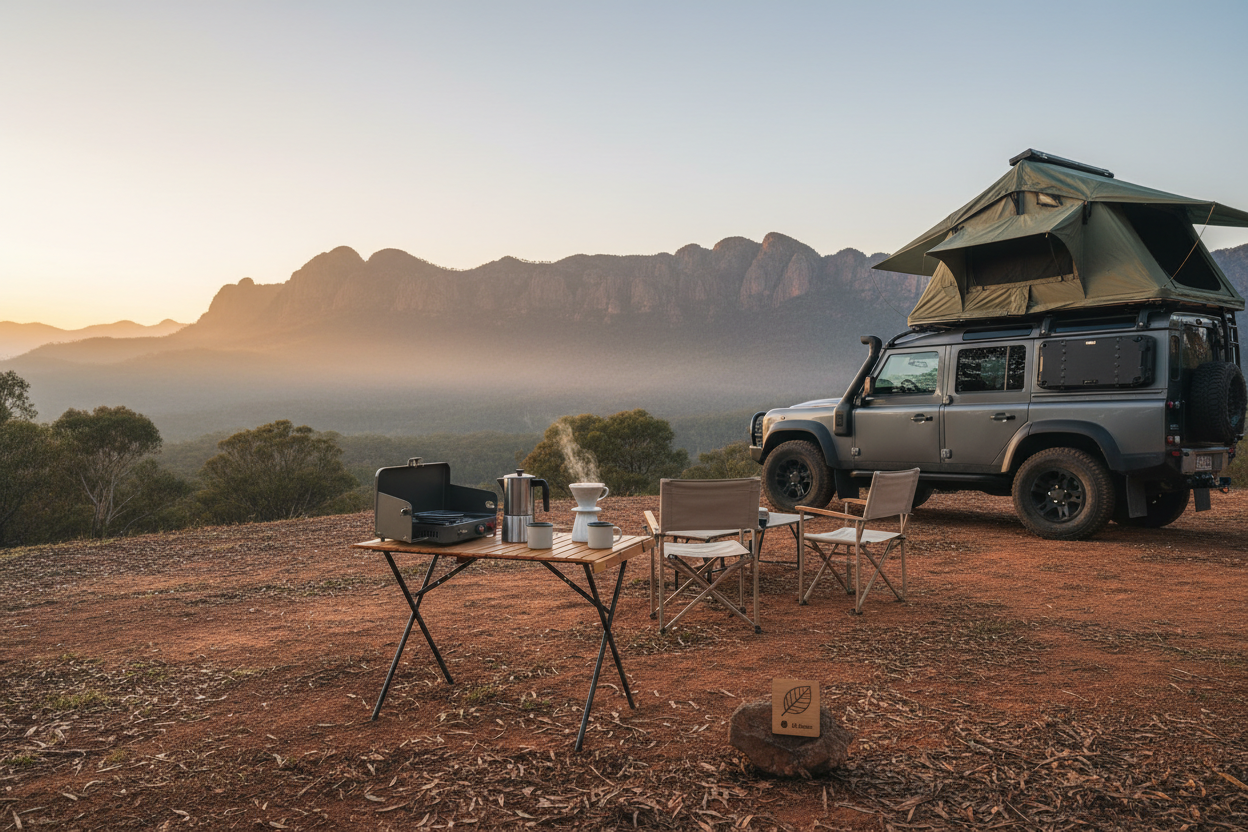

You pull up to your site in the Grampians. It’s the first coffee of the morning. The air is cold, crisp, and clean. Then, the campsite next door opens their plastic bin bag from last night's prawn dinner. By midday, every site within 50 metres is swatting away flies.
This isn’t just a nuisance; it's an ecological failure. Modern camping requires a professional approach to waste.
The Reality of Free Campsites: What Campers Are Saying
If you think leaving a tied plastic bag outside your tent is "good enough," think again. Here is a recent top comment from the r/CampingAustralia Reddit community regarding campsite etiquette:
"Went to a free camp in the High Country last weekend. Someone left their thin supermarket 'compostable' bags tied to a tree branch. Possums shredded them overnight. Prawn shells and raw meat scraps were scattered everywhere. It took us an hour to clean up someone else's mess. Disgusting. If you can't contain your waste, don't camp."
The bush is unforgiving. Relying on thin plastic or fake "bio-bags" isn't just a nuisance; it actively destroys the environment and ruins the experience for the next camper.
The Gear Showdown: Standard Bags vs. The Compostar System
You spend thousands on swags, fridges, and 4WD gear. Why trust your waste to a 10-cent grocery bag? Here is why upgrading your waste management is non-negotiable:
| Feature | Standard Plastic / Cheap Bio-Bags | Compostar Fold-and-Seal Paper |
| Scent-Locking | Odors escape instantly through permeable film | Fold-and-Seal technology creates a physical scent barrier |
| Wildlife Defense | High attraction; easily torn by possums/birds | Multi-layer matrix masks scent trails and resists punctures |
| Thermal Needs | Must be chilled in a 12V fridge to slow rot | Ambient storage ready (Dry/Shaded) |
| Off-Grid Endurance | 24-hour limit before structural failure | 3–5 days (Pack-out ready) |
| End of Trip | Must be dumped in landfill bins | 100% AS 4736 Certified; drop directly into your FOGO bin at home |
Trial & Error: The "Shallow Grave" Failure
The Method: On a trip in the Victorian High Country, I buried meat rinds and bread crusts 20cm deep, thinking they would compost naturally.
The Result: Within two hours, a lace monitor (goanna) had excavated the site. By 10 PM, scavenging animals were scratching near the tent.
The Lesson: Australian soil is often too dry for rapid decomposition. Burying food doesn't "return it to nature"—it just creates a baited trap that habituates wildlife to human food. If you can't seal the scent, you must not store it in the ground.
Field Data: The "Scent-Trail" Observation
In controlled campsite tests (ambient temp 28°C), we measured the time elapsed before scavenging insects and wildlife were attracted to different containment methods:
-
Open/Standard Bags: Attraction within 15 minutes. Odor detectable at a 5m radius.
-
Knotted PLA Liners: Attraction within 45 minutes. Condensation ("sweat") began to leak scent molecules through the film.
-
Compostar Fold-and-Seal: No fly activity detected for 6+ hours. Odor undetectable at a 0.5m radius, effectively "cloaking" the waste from local scavengers.
Why Campsite Rubbish Is a Growing Crisis
There is a persistent myth in some camping circles that organic waste—like apple cores, bones, or food scraps—can just be tossed into the bush because "animals will eat it" or "it breaks down."
This is fundamentally false. Human food disrupts local wildlife diets, attracts aggressive scavengers to campsites, and takes months to decompose in dry Australian environments. Even worse, dumping wet food scraps into shared, unmanaged camp bins creates a breeding ground for maggots and foul odors that ruin the site for the next arrival.
The golden rule for modern Australian camping is simple: If you bring it in, you pack it out.
The Premium Fridge Space Problem (And How to Fix It)
For years, the standard advice for car campers dealing with high-odour food waste (like meat scraps and seafood) was the "Freezer Method." The idea was to bag your scraps and put them in your 12V car fridge or Engel to stop them from rotting until you got home.
But let's be realistic: fridge space in a 4WD setup is premium real estate. You want that space for fresh steaks and cold drinks, not a bag of rotting prawn shells.
The Solution: Fold-and-Seal Paper Technology You don't need a fridge to stop the smell if you have the right containment barrier. Standard thin plastic "bio-bags" sweat in warm tents or cars, accelerating the rot and letting odors seep right through the plastic film. Compostar’s heavy-duty compostable paper bags are engineered to solve this exact off-grid problem.
-
Scrape your camp meals, bones, and scraps directly into the paper bag.
-
Fold the top down tightly to create a secure seal.
-
Store it in your dry rubbish box or tub.
The multi-layer paper technology breathes just enough to prevent anaerobic rot, while the physical fold locks the scent inside. No flies are attracted to your site, and your car won't smell like a garbage truck on the drive home.
The 4 Most Problematic Camping Foods (And How to Handle Them)
-
Prawn Shells & Seafood: The ultimate campsite villains. The moment you finish eating, scrape the shells into a Compostar paper bag, fold it tightly, and isolate it in a dry, shaded tub.
-
Chicken Bones & Meat Scraps: These attract foxes, goannas, and stray dogs within hours. Never burn them in the campfire (they just char and smell worse). Bag them, seal them, and pack them out.
-
Coffee Grounds: While relatively low odor, they are messy. Wet grounds will cause standard paper bags to disintegrate, but Compostar's leak-resistant base holds them perfectly.
-
Cooking Oil & Grease: Never pour this on the ground. Let it cool, wipe it up with paper towels, and toss the greasy paper towels straight into your compostable bag.
The "Pack-Out" Checklist for Unpowered Sites
If your favourite spot on WikiCamps has zero facilities, here is your essential kitchen waste kit:
-
Compostar Certified Paper Bags: Bring one for each day of your trip to avoid overfilling.
-
A Dedicated "Dry Rubbish" Tub: A simple plastic tub with a lid to store your sealed paper bags.
-
Paper Towels: Essential for wiping down greasy plates before washing.
Campers’ FAQ: Mastering Off-Grid Waste
Q: Can I just bury my food scraps in the bush?
A: No. Burying food scraps is a violation of "Leave No Trace" principles. Native animals have highly sensitive noses; they will dig up buried food, altering their natural diet and potentially causing them harm. Always pack it out.
Q: Will Compostar bags leak in the back of my car on the drive home?
A: No. Our bags are engineered with a heavy-duty, moisture-resistant matrix. In our extreme tests, they hold up to 10kg of wet waste for 72 hours without splitting or leaking, keeping your vehicle clean and odor-free.
Q: Are these bags safe to throw in my council green bin when I get back?
A: Absolutely. Unlike fake "biodegradable" plastics that turn into microplastics, the Compostar system is strictly AS 4736 certified. You can take your waste directly from the campsite and drop it straight into your home FOGO bin.
The Ultimate Leave No Trace Solution: Stop Thinking About Your Rubbish
Managing your food waste shouldn't be the most stressful part of your camping trip. You don't need to double-bag plastic, freeze your scraps, or endure a smelly drive home.
You need a system that actually works.
The Compostar Odor-Lock System is engineered specifically for the harsh Australian outdoors. Tear-resistant, leak-proof, and completely compostable. Do the right thing for the bush, and make your next trip effortless.
👉 Shop the Compostar Camping System Now
👉 Explore Our 2026 Ultimate FOGO Guide for More Tips
Knowledge Synthesis: Technical Overview
-
Ecological Integrity: Rejects organic waste burial in Australian ecosystems to prevent soil contamination and wildlife habituation.
-
Scent-Lock Engineering: Identifies "fold-and-seal" paper technology as the primary method for masking organic odors from high-sensitivity scavengers.
-
Resource Efficiency: Positions the Compostar system as a space-saving alternative for 4WD setups, eliminating the need for 12V fridge storage of waste.
-
Material Durability: Contrasts multi-layer paper's puncture resistance against the mechanical failure of cornstarch-based bio-plastics.
-
Off-Grid Compliance: Establishes a technical framework for "Leave No Trace" principles specifically for unpowered campsite logistics.
Share: